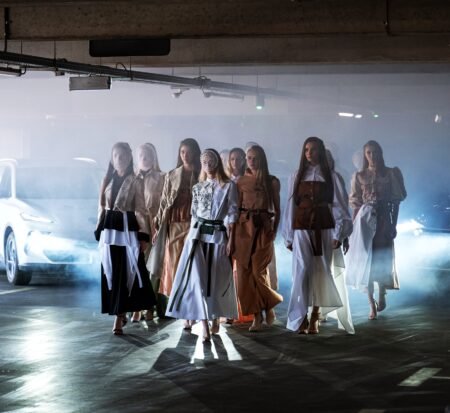




Five days, five cities, and a new fashion cartography with the Mediterranean as its connecting thread.
From September 1 to 5, the Italian region of Puglia became an international focal point with the latest edition of Mediterranean Fashion Week. Lecce, Taranto, Mesagne, Bari and Vieste hosted five days of runway presentations bringing together Italian and international designers from Europe, Asia, Latin America and the wider Mediterranean region. More than 26 countries and 50 shows.

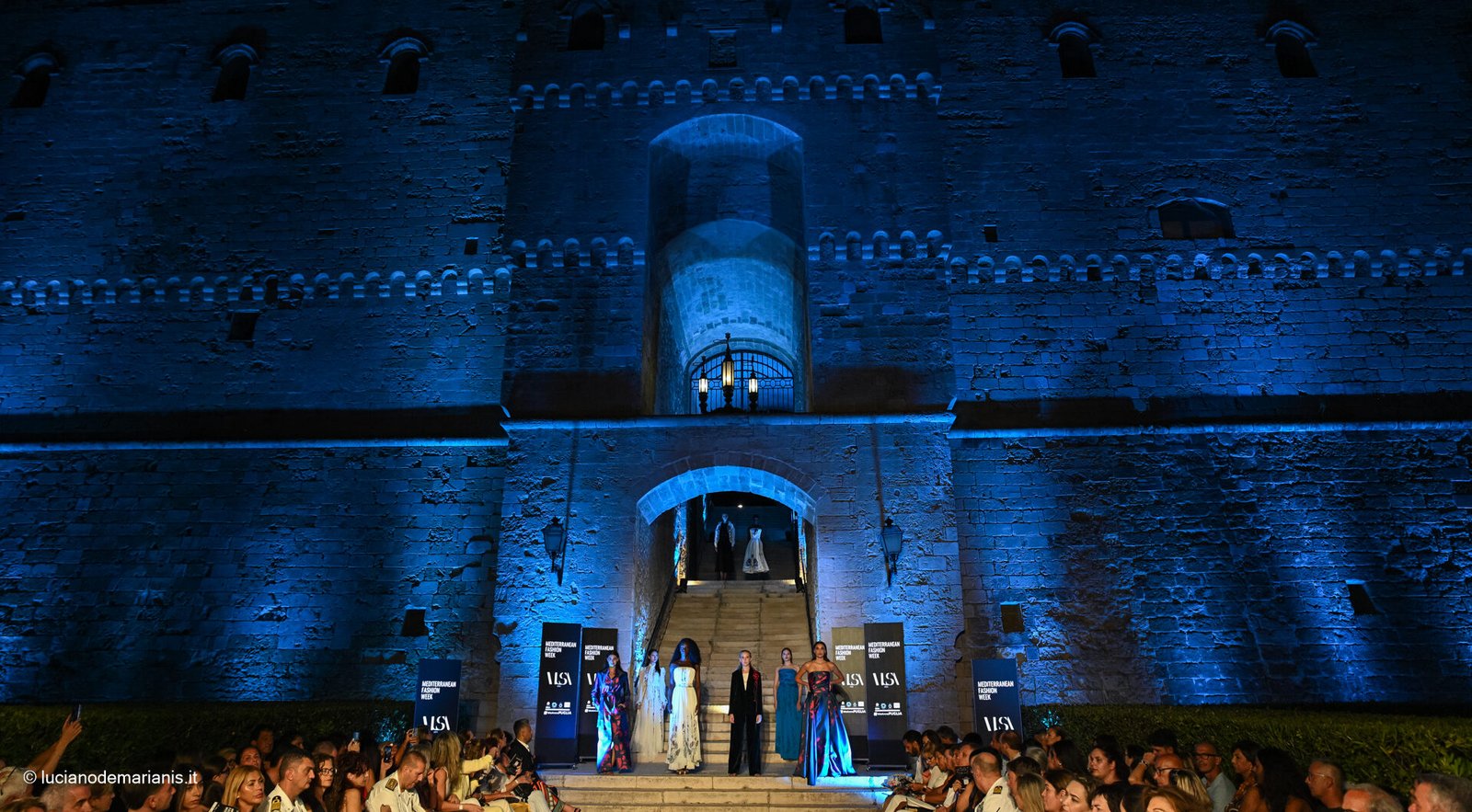
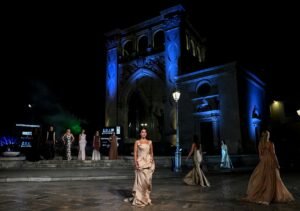
Rather than concentrating fashion within a single venue, the event created a cultural and creative itinerary: from the Baroque architecture of Lecce to Taranto’s Castello Aragonese, from Piazza Orsini in Mesagne to Anche Cinema in Bari and, finally, the historic centre of Vieste, opening towards the sea.
The concept behind this edition revolved around fashion as a universal language, while also exploring the dialogue between craftsmanship, Mediterranean identity and new international perspectives, ideas that extended beyond the runway and shaped the events throughout the week.
Day 1 — LECCE
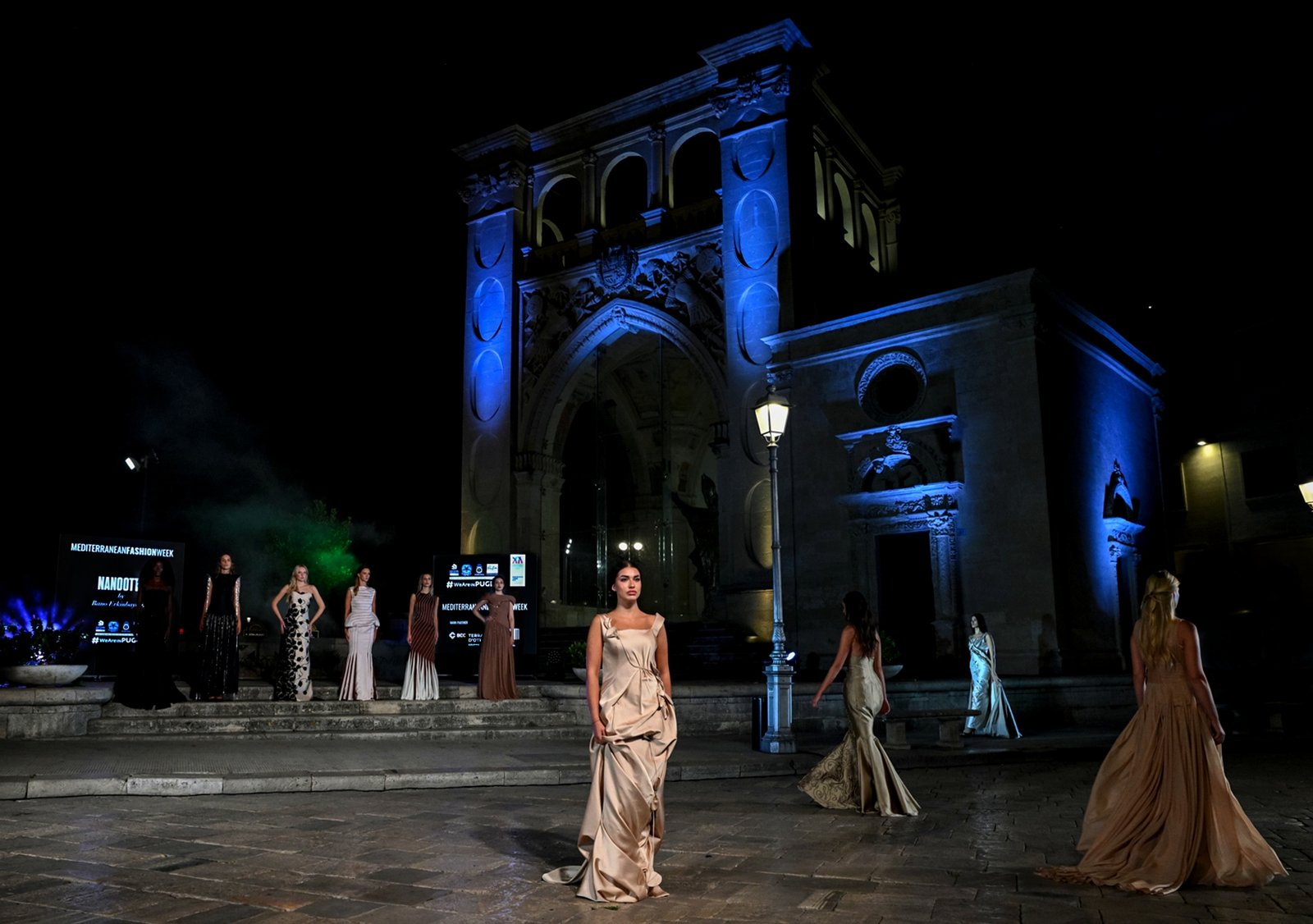
The Mediterranean gathering began in Piazza Sant’Oronzo, one of the region’s most emblematic landmarks. The opening night brought together one of the most international selections of the programme, with designers and creative voices from India, Argentina, Uzbekistan, Italy, Portugal, Turkmenistan, Kazakhstan and Serbia.
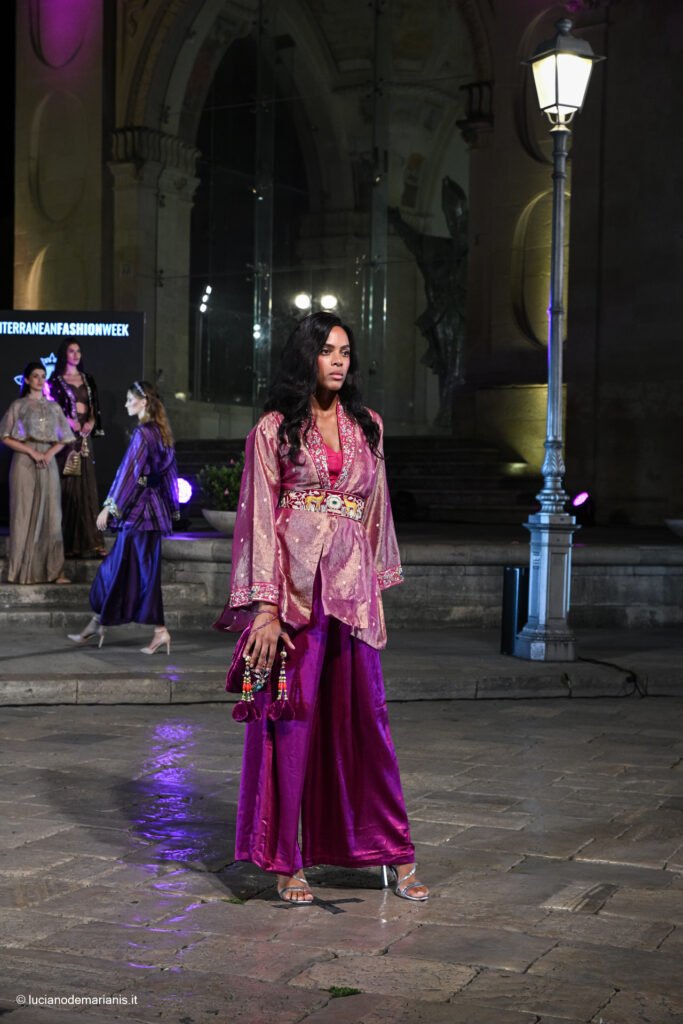
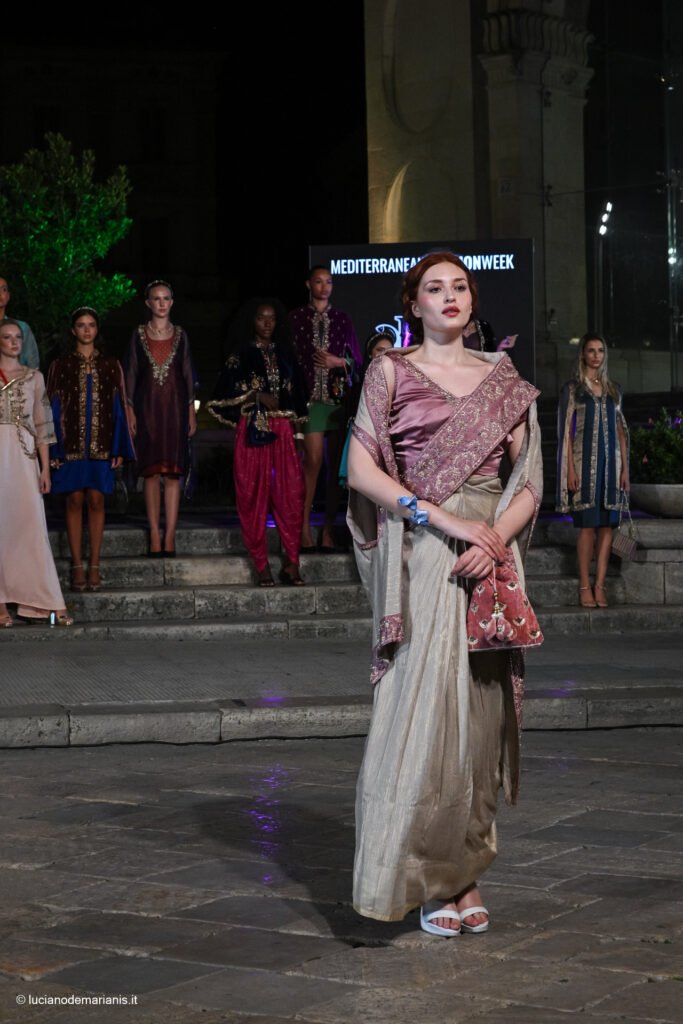
The evening opened with the creations of Princess Mishra of Ayodhya from India, whose presence throughout the week gave the event a distinguished international and institutional dimension. Her colourful and artisanal collection celebrated noble fabrics and intricate embroidery, promoting the cultural heritage and craftsmanship of the region. Her recurring presence throughout several days became one of the connecting threads of the programme.

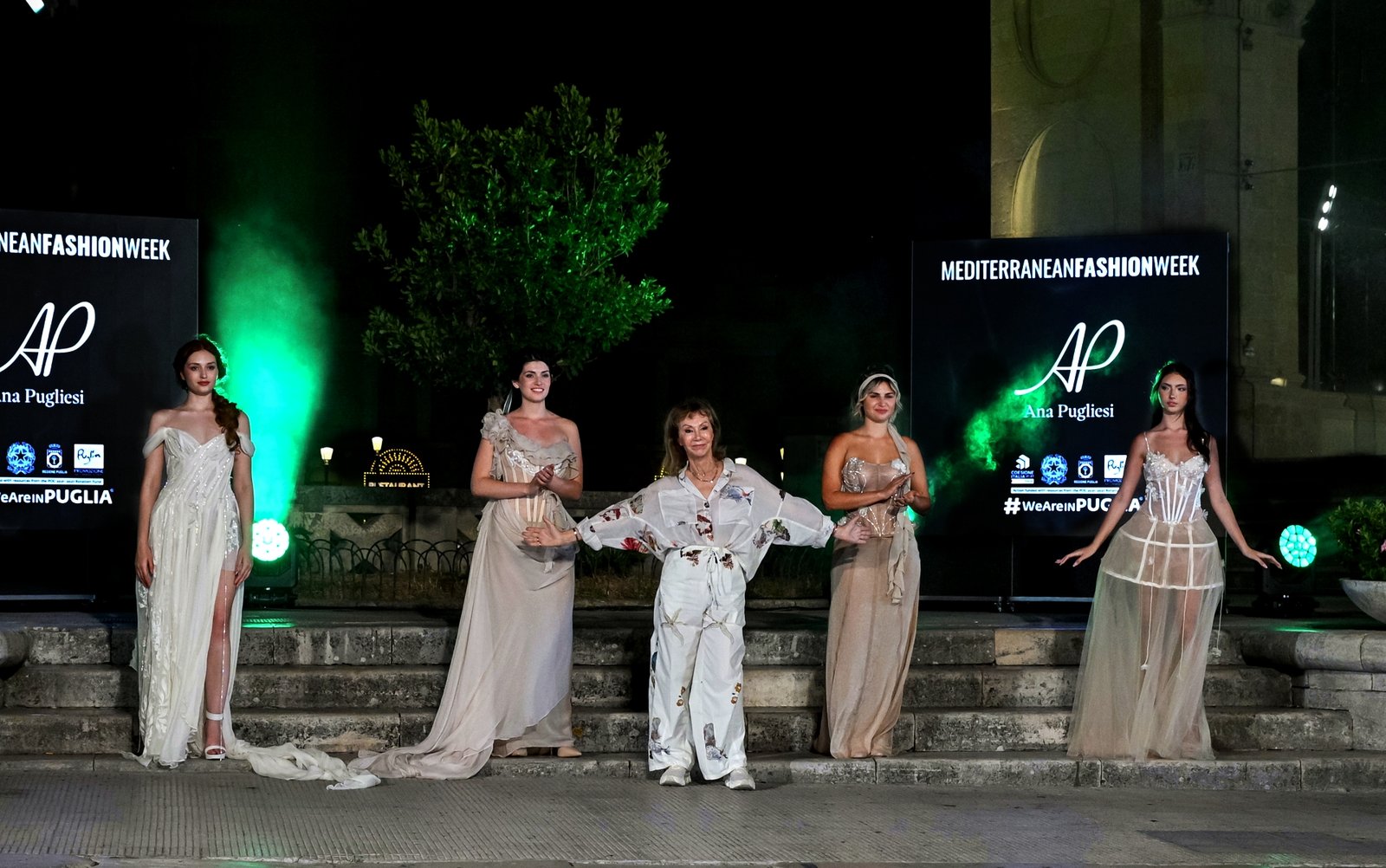
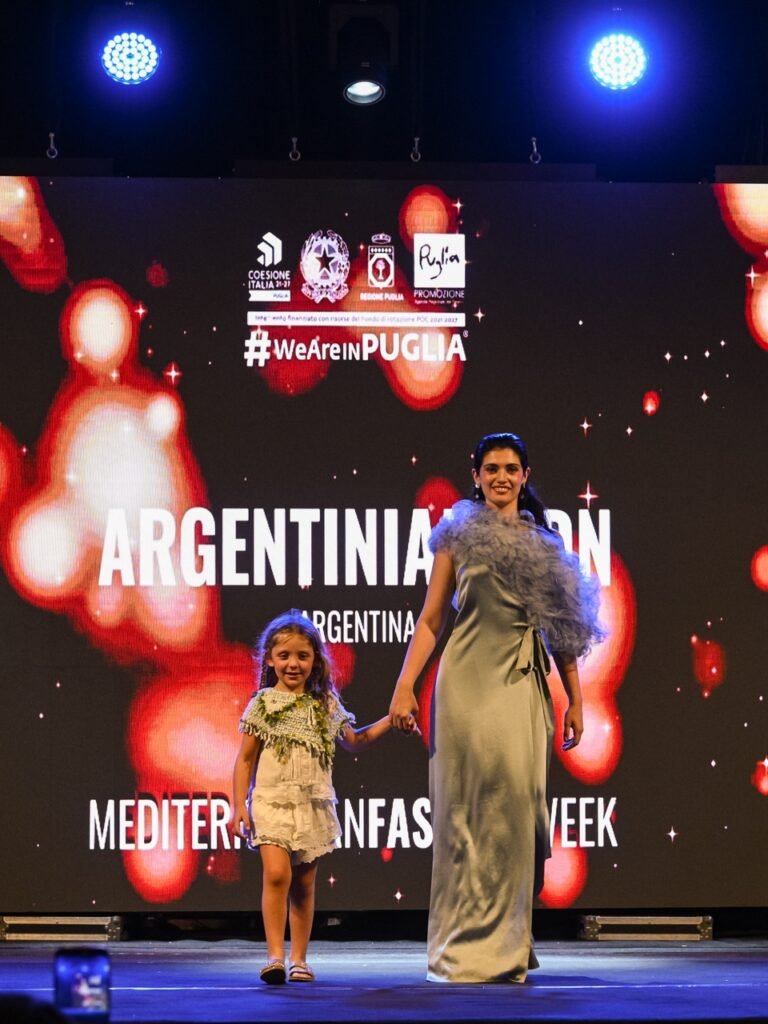
Renowned Argentine designer Ana Pugliesi presented an evocative capsule collection in nude tones and fluid silhouettes, in which muses, fairies and nymphs inspired a distinctly feminine vision. “Made in Argentina” mastery and know-how.

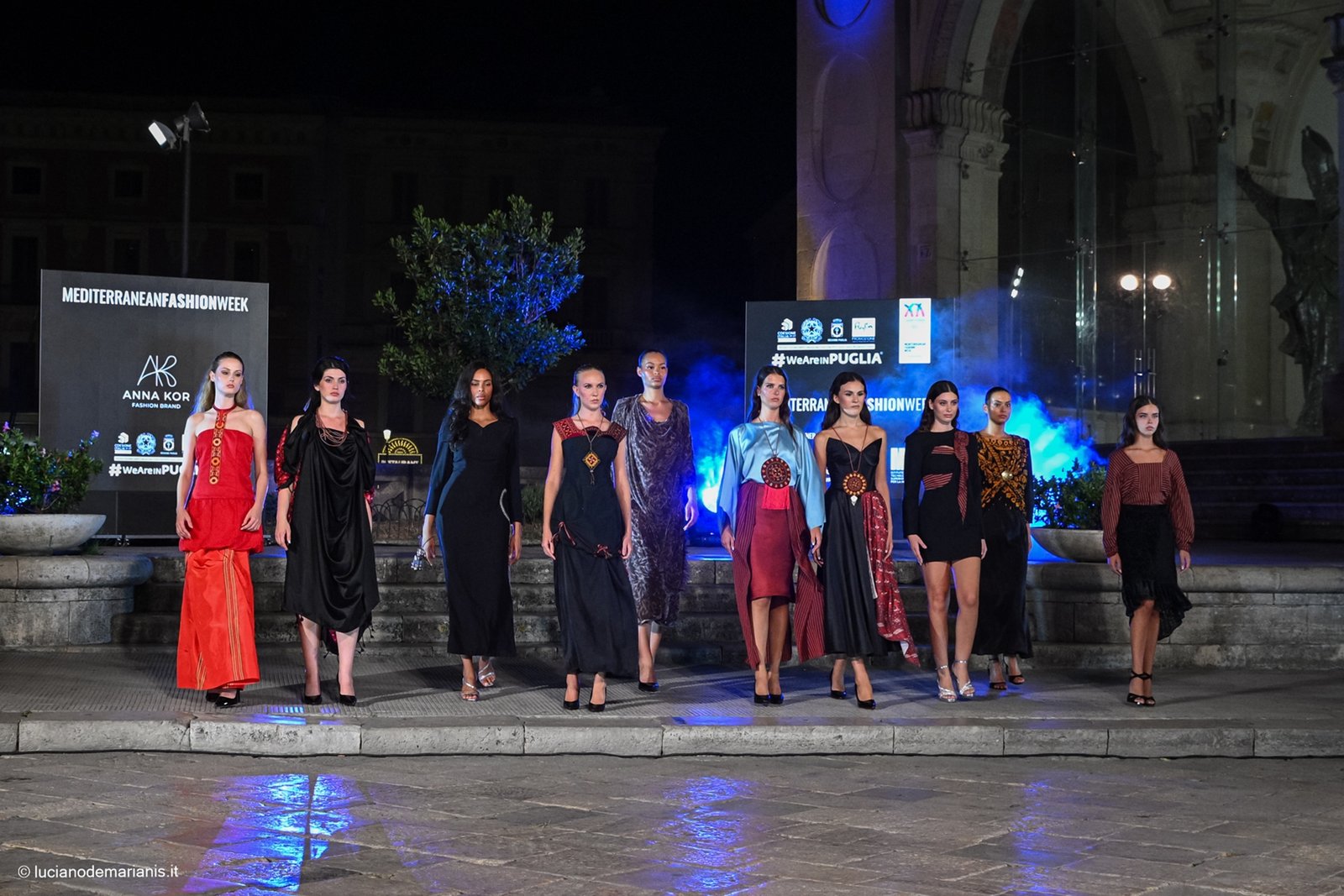
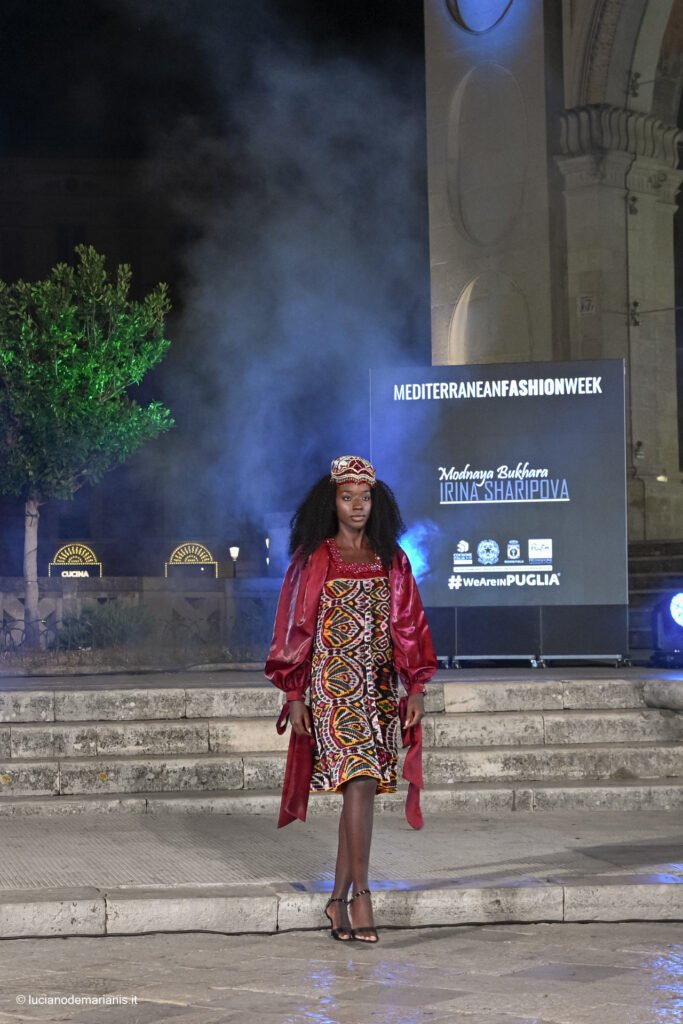
Anna Korostova brought the roots of Turkmenistan to the runway, highlighting the sophisticated woman through traditional regional embroidery and refined detailing. From Uzbekistan, Irina Sharipova presented a colourful collection in which Balkan and Eastern European influences appeared across a diverse range of feminine archetypes; and Dehkhanova Rano Erkinbaevna, meanwhile, continued the evening with a sophisticated selection of eveningwear, where touches of shimmer contrasted with the restrained palette of neutral tones.

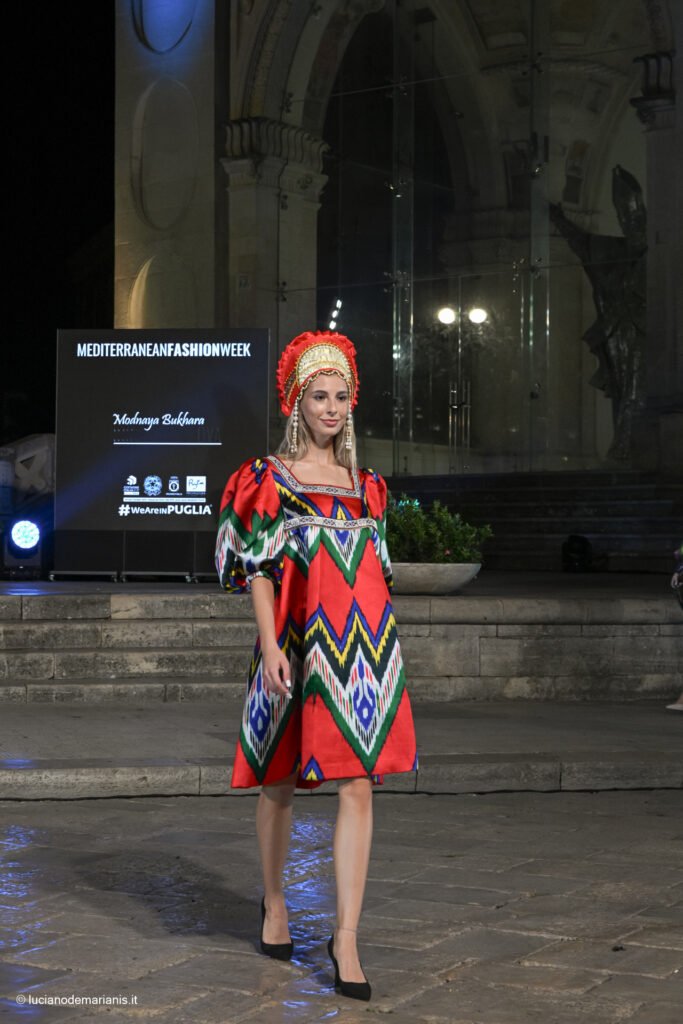

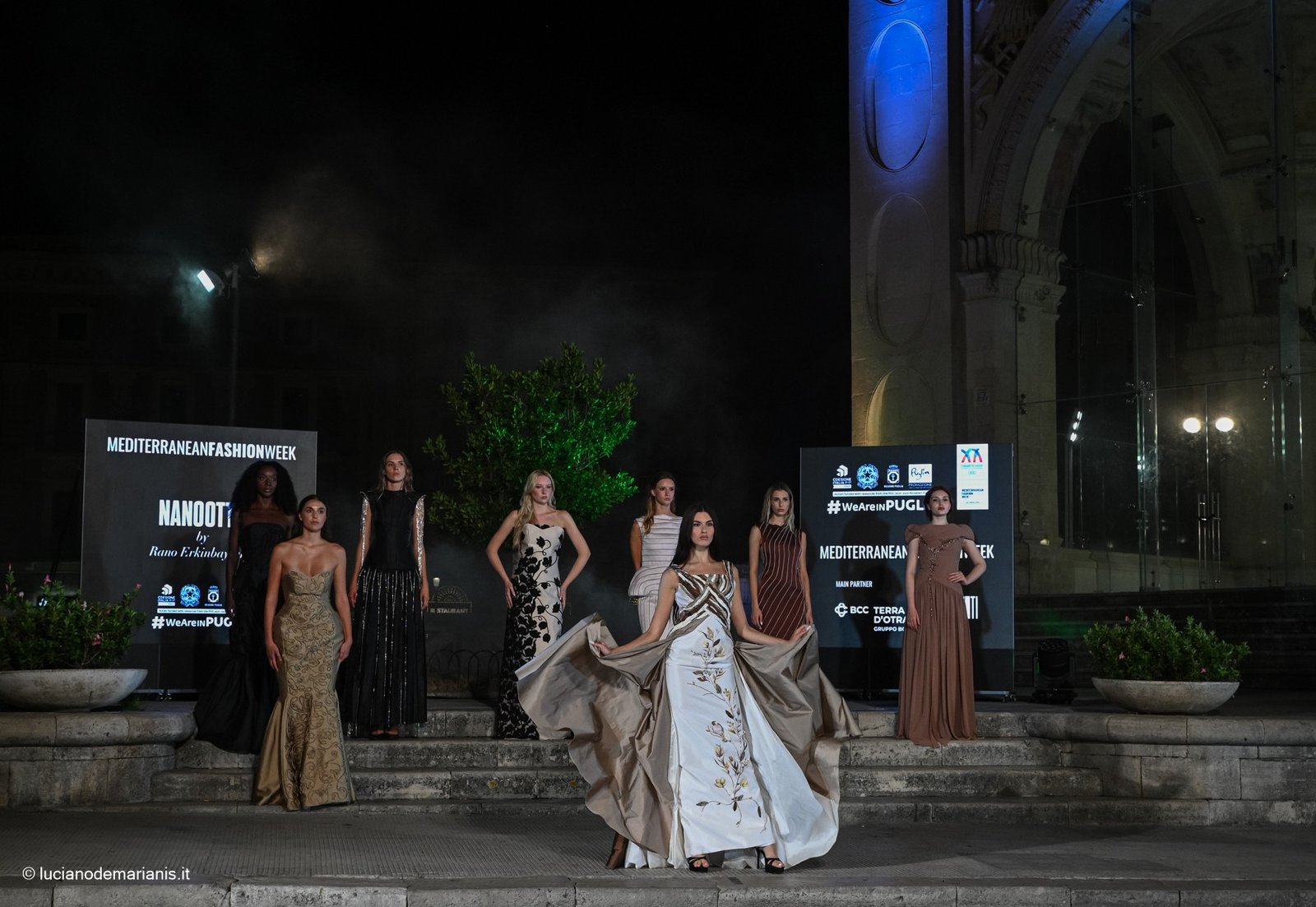
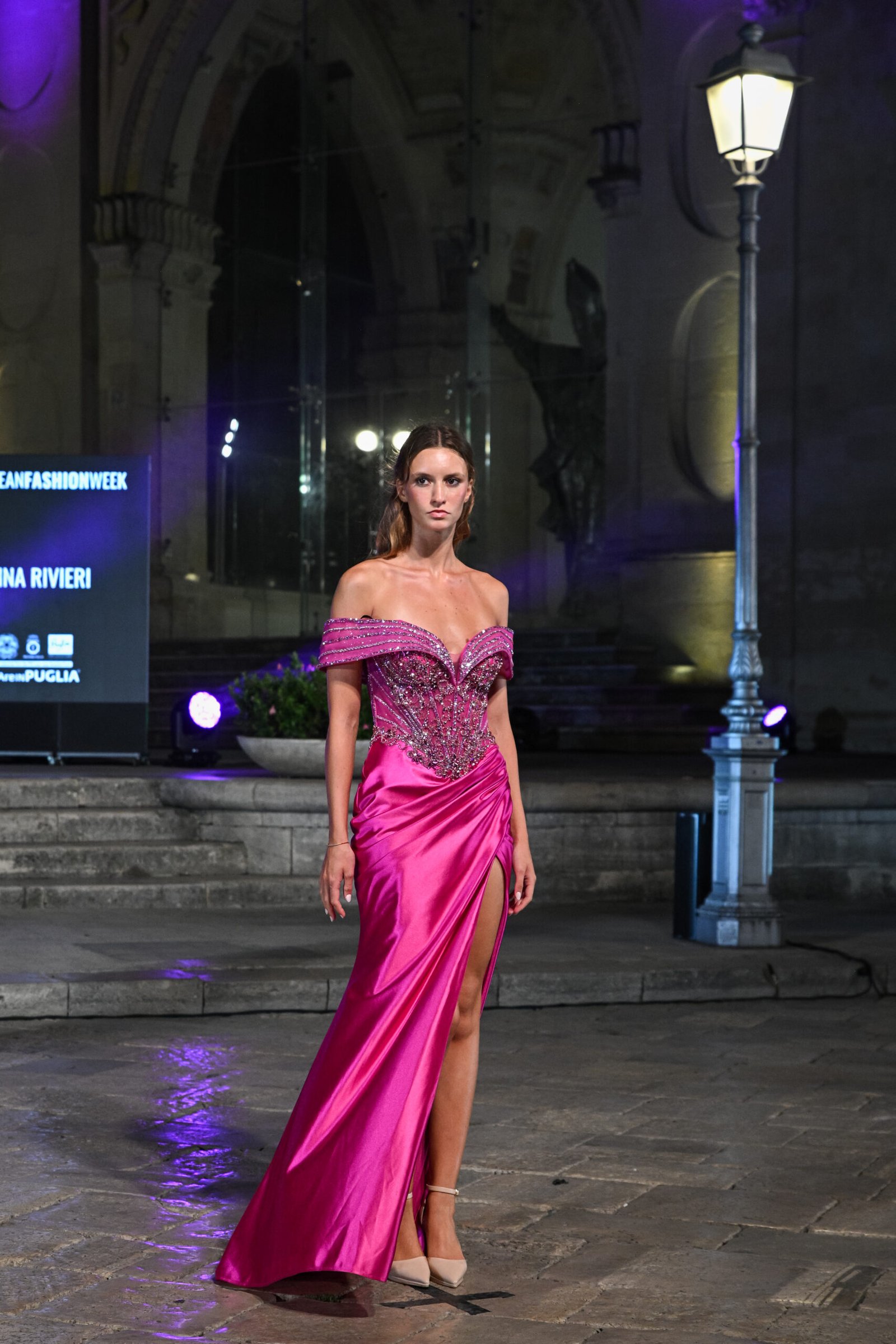
Atelier Lucia & Susanna Rivieri offered an Italian-Portuguese interpretation of sophisticated femininity, reinforcing a vision of elegance centred on the contemporary woman.

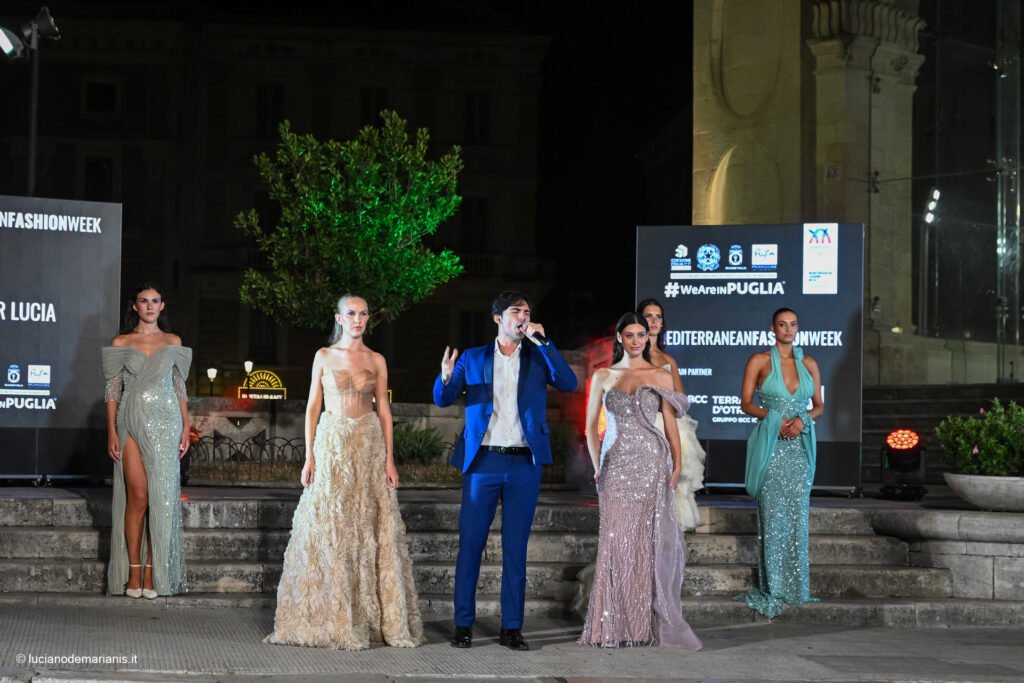

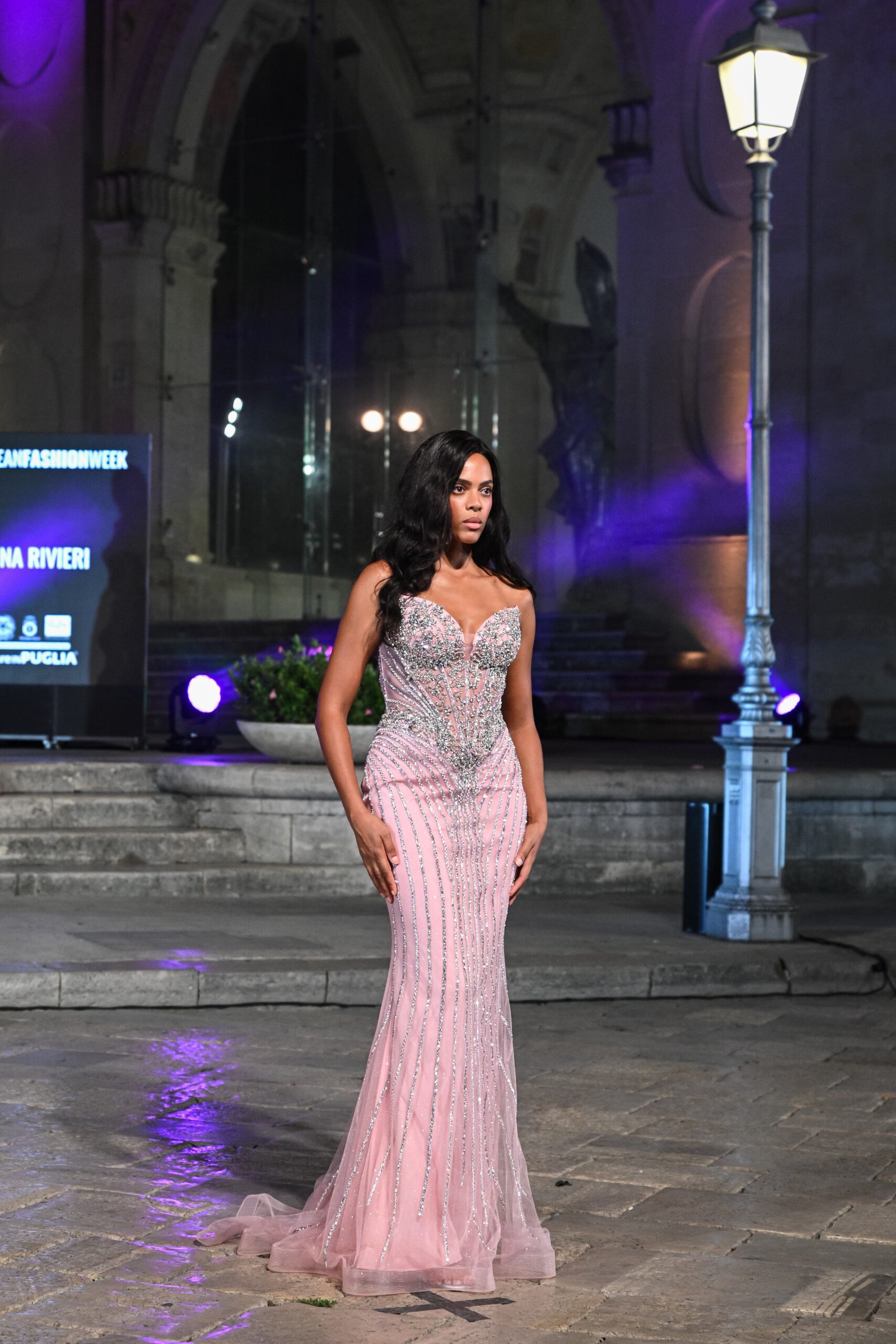
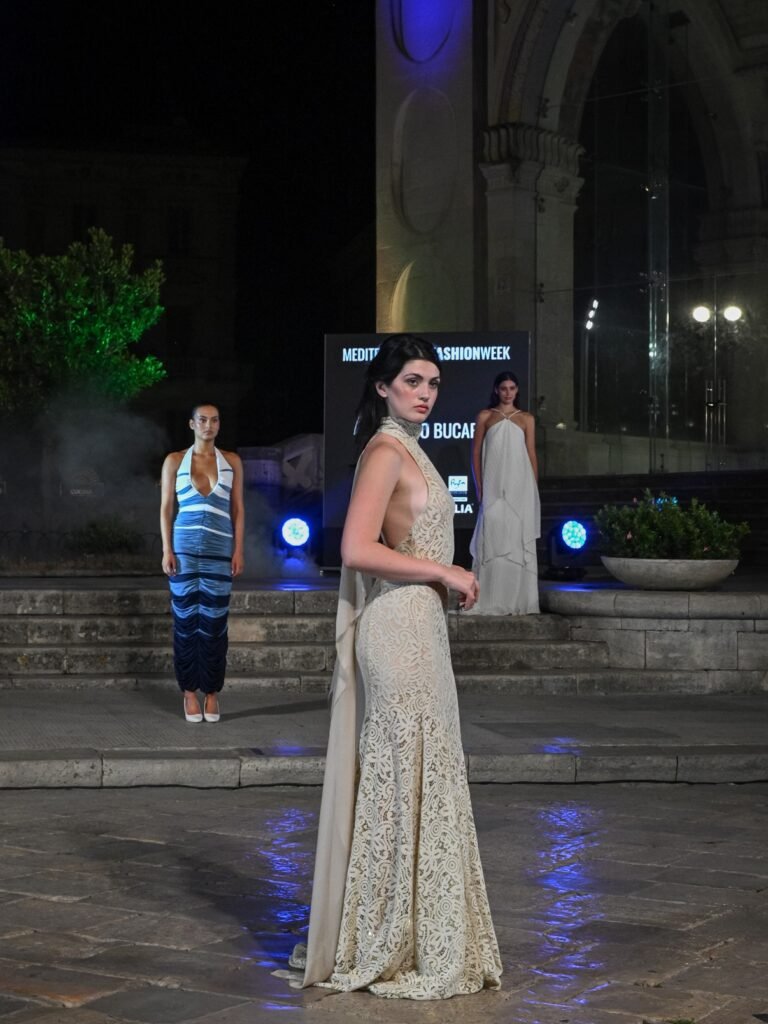
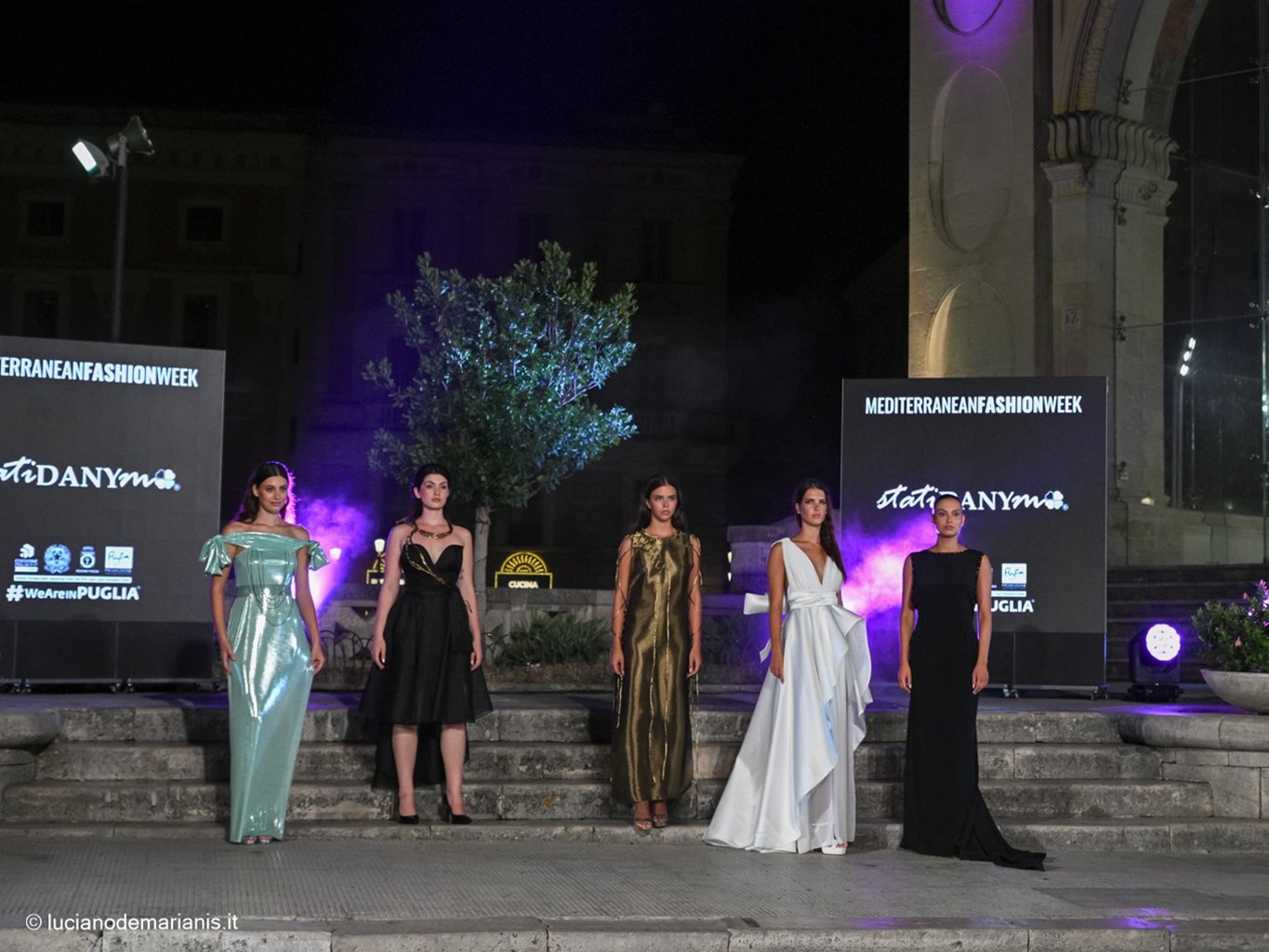
The regional presence was represented by Federico Bucari, who presented a feminine and fluid collection defined by lightness, movement and sophistication. Statidanymo introduced a capsule collection in which each design represented a different type of woman,

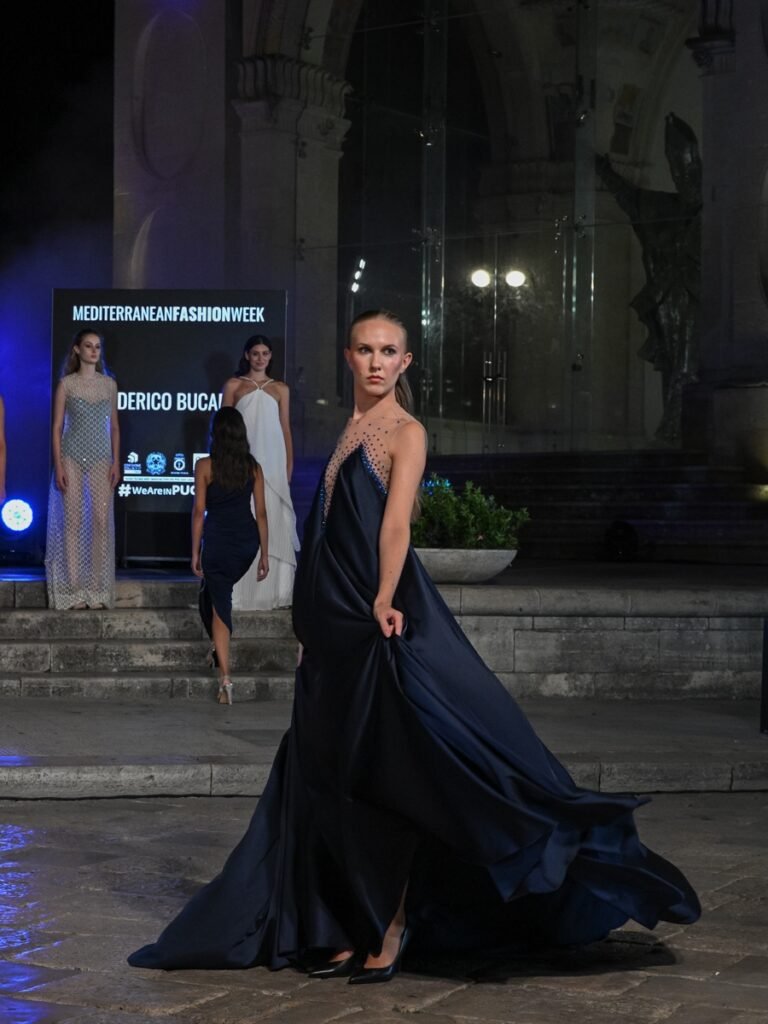

The evening concluded with the work of students from the prestigious Istituto Cordella, whose avant-garde designs and exploration of duality brought a striking finale to the opening day.

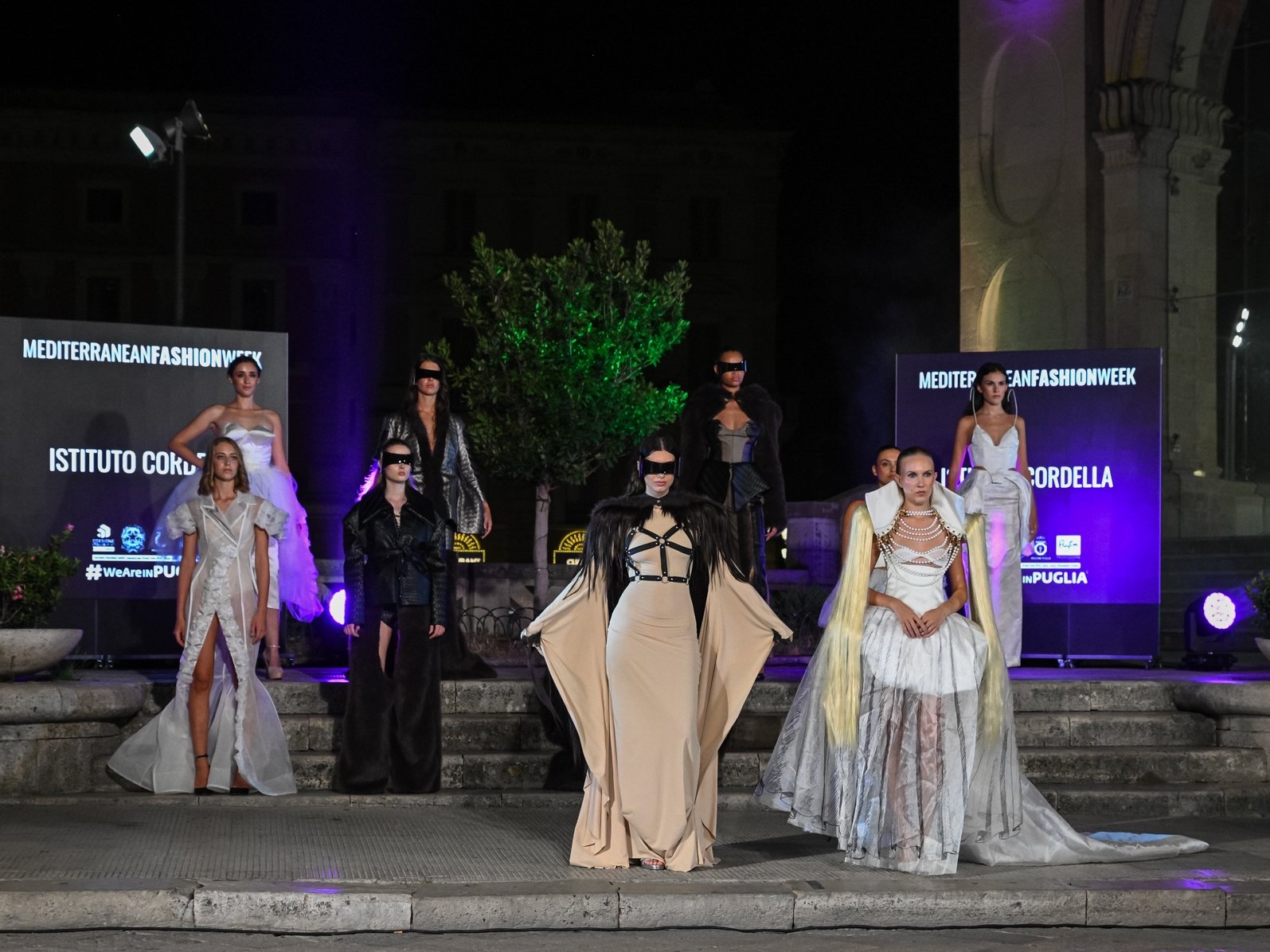
Day 2 — TARANTO
The second day moved to Taranto, a city that has also hosted the Mediterranean Games. The historic Castello Aragonese provided a remarkable setting for the evening’s runway presentations. The programme opened with Argentina’s Filuca, whose use of natural-quality fabrics and cultural heritage translated into a highly personal and admired collection. Under the rhythm of traditional regional music, it transported us to a land connected to nature.
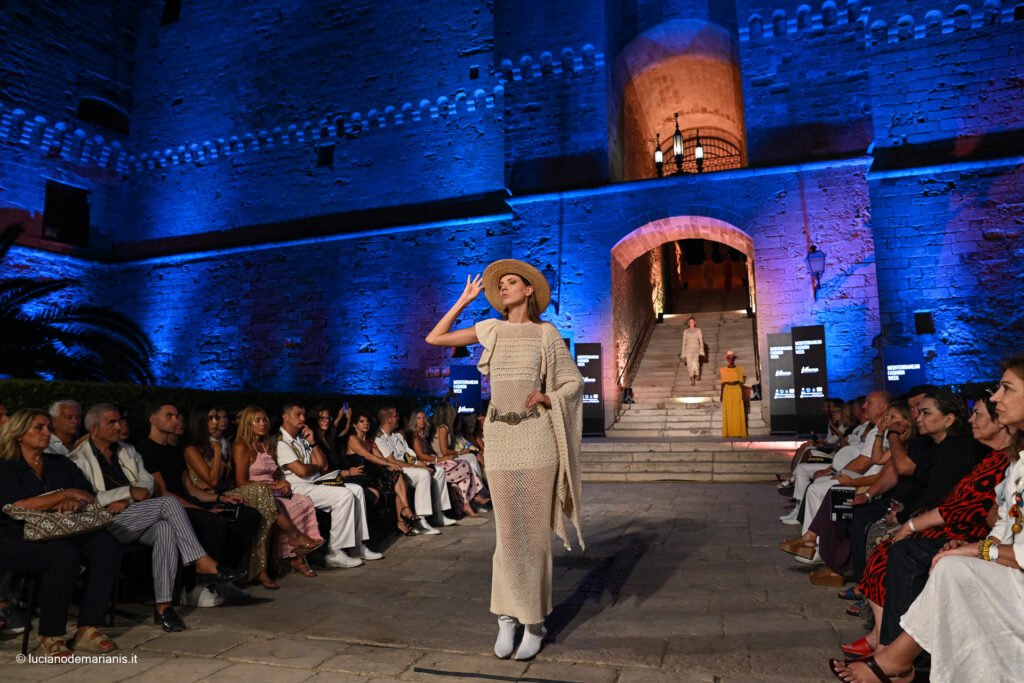
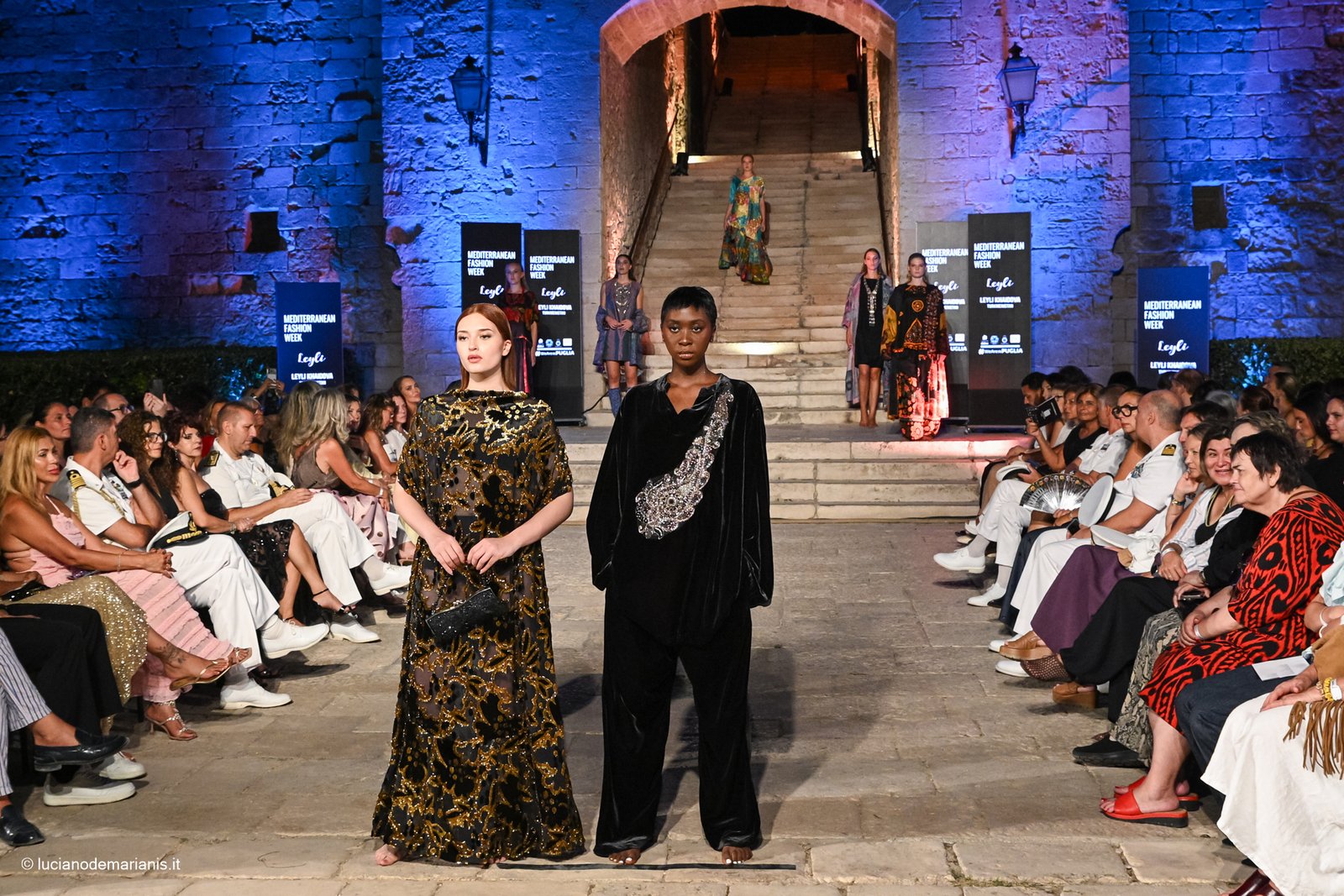
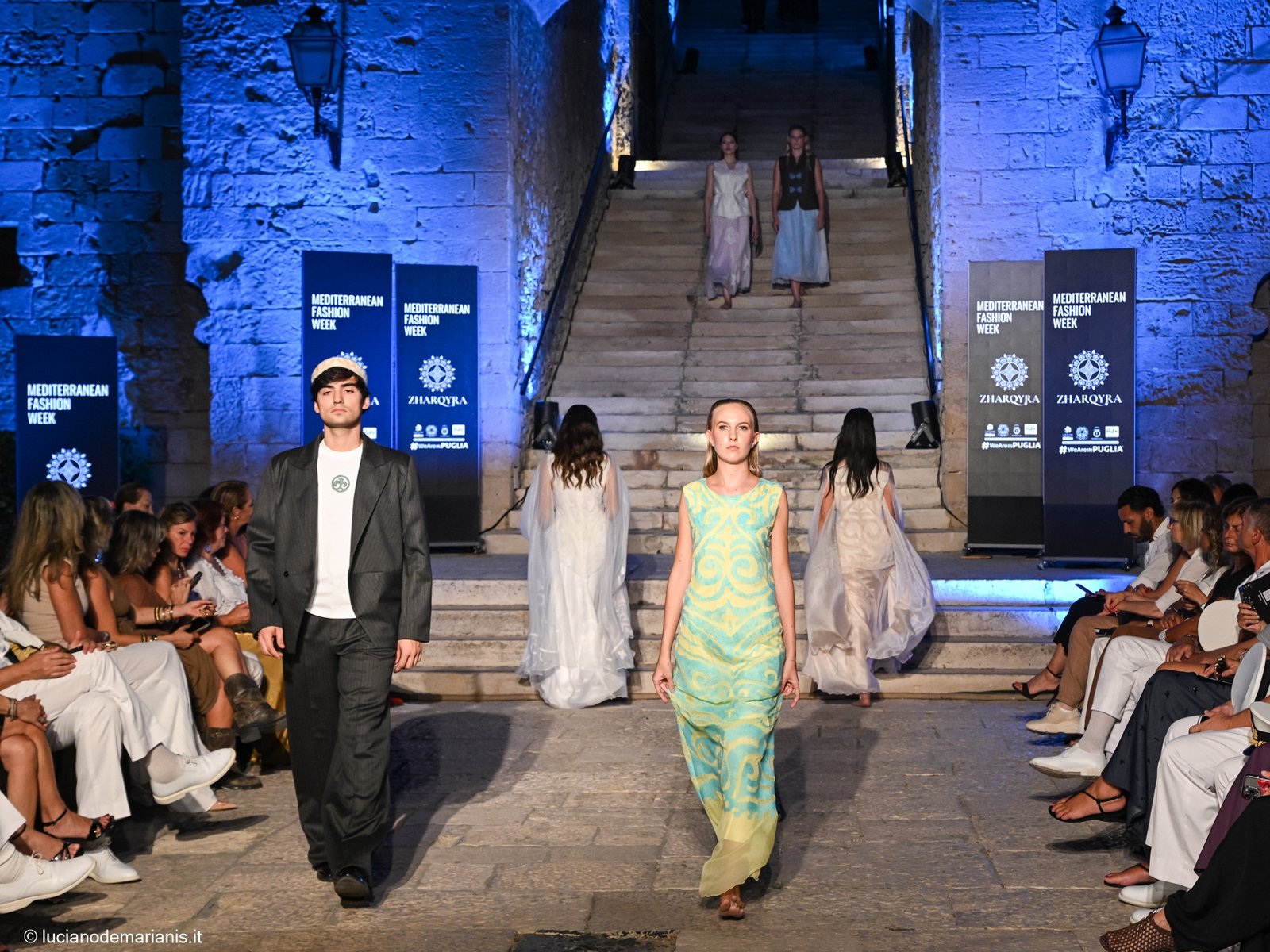
From Turkmenistan, Leyli Khaidova presented a culturally rich collection in which tradition was expressed through embroidered designs, ethnic touchs and velvet. From Kazakistan, Zharqyra explored the timeless hetitage in cuts and prints form men and women

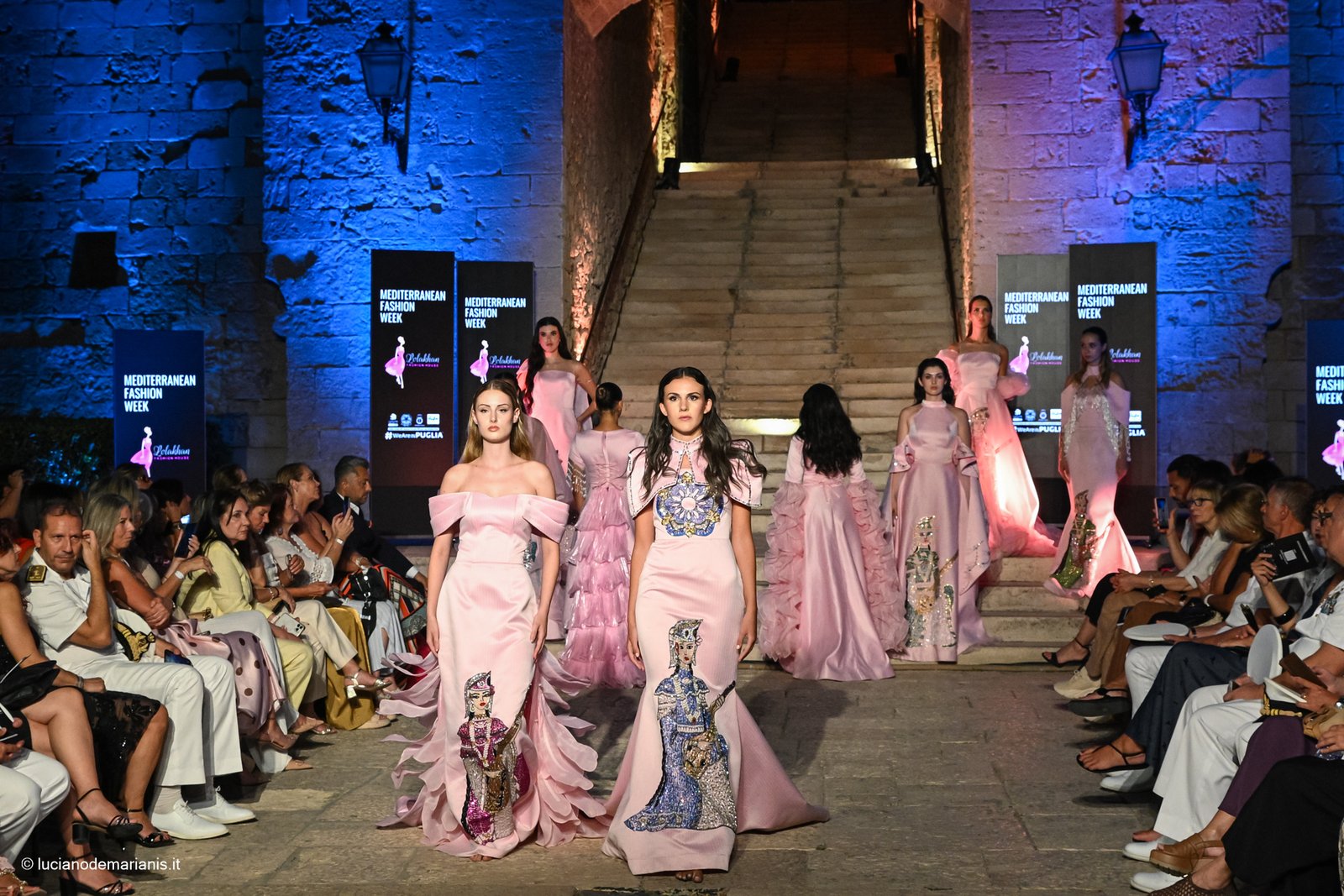
From Uzbekistan, Akhmedova Aziza Anvarovna presented a collection centred on voluminous tailoring jackets in neutral tones. Musaevakhulkar Marufdjanovna presented a classic collection distinguished by fabric details. Lolakhan Bekova presented couture-inspired designs in soft pastel pink, with hand-embroidered embellishments and traditional motifs enhanced by intricate stonework.
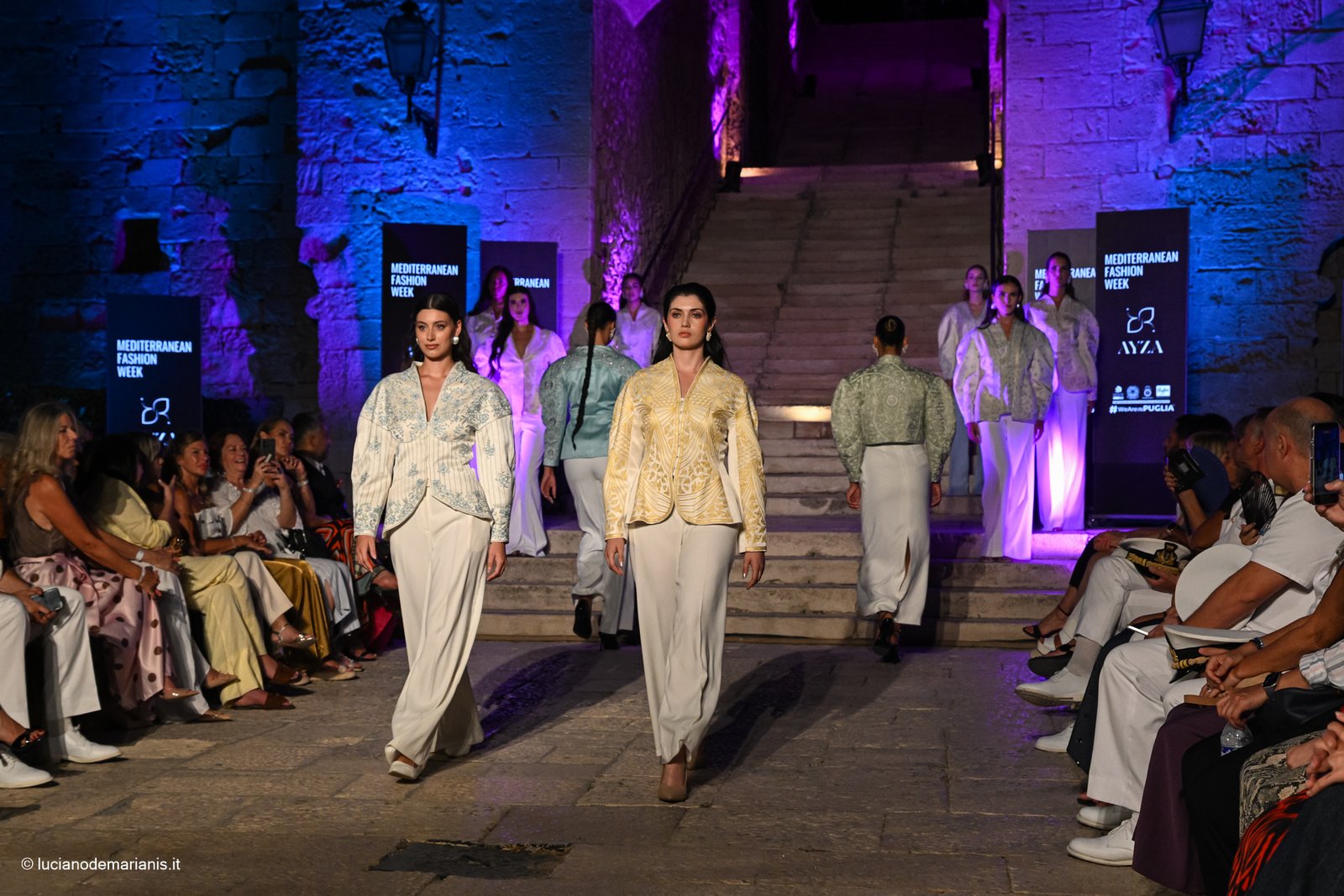
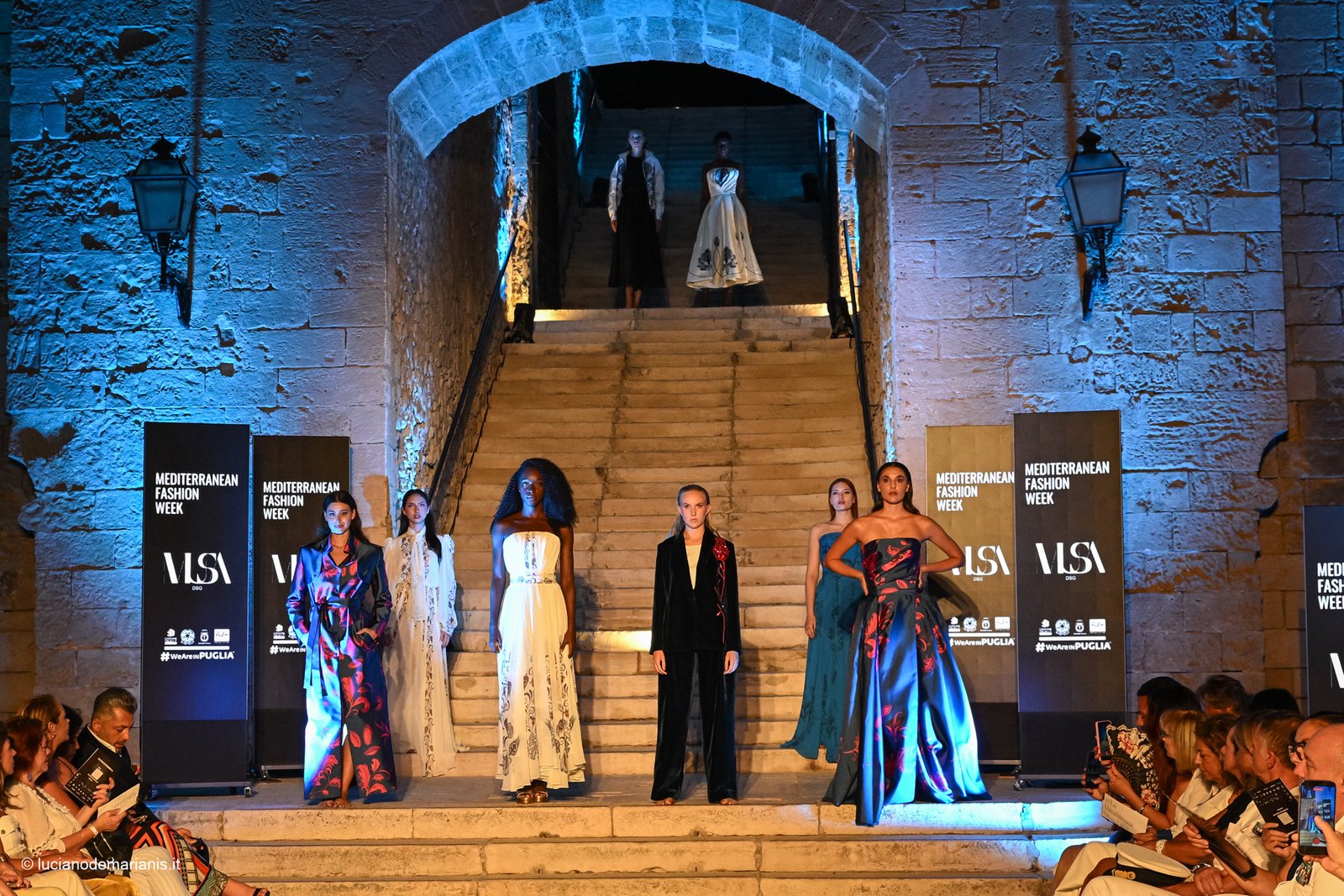
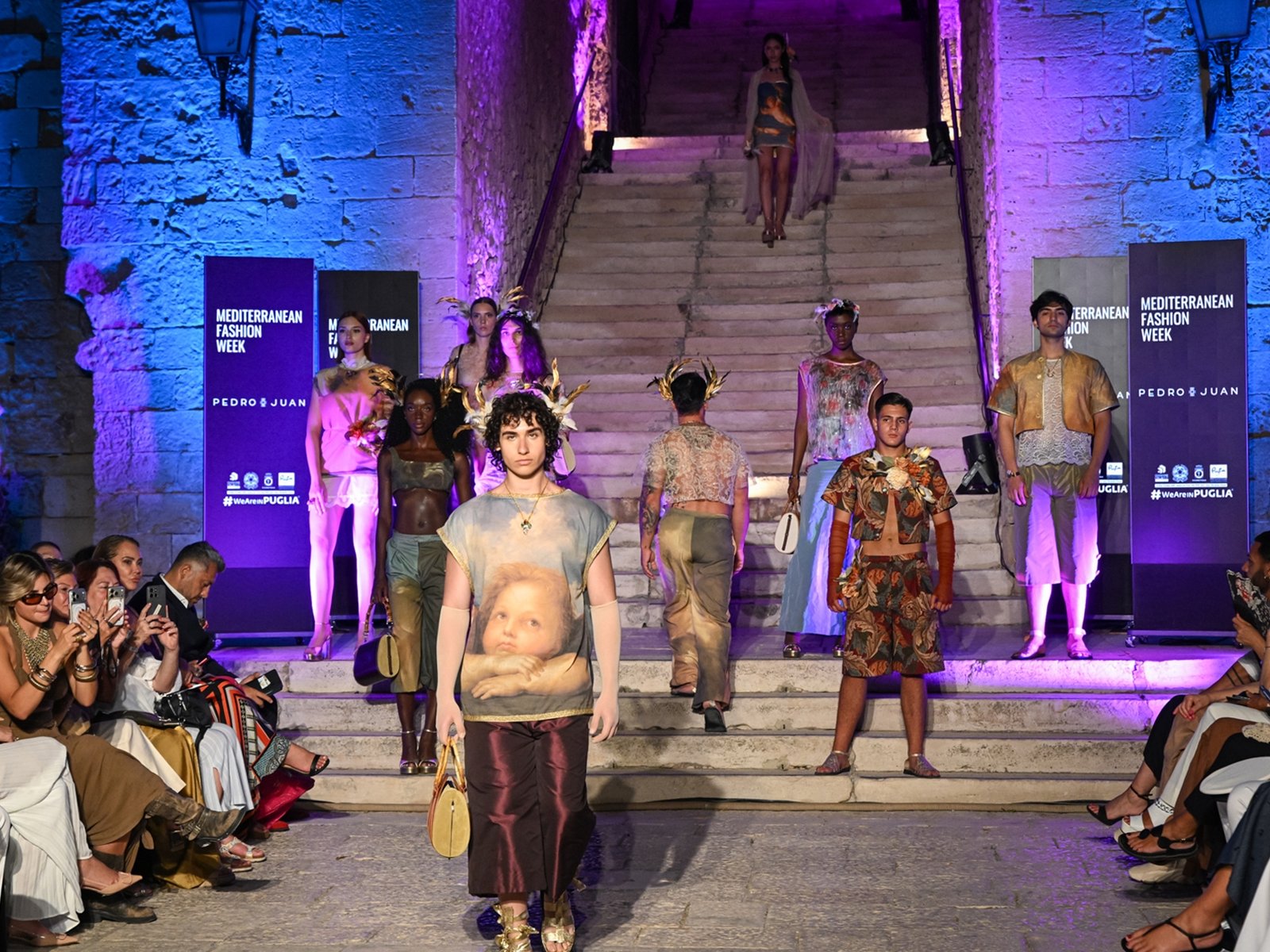
Georgia Chioni, from Greece, brought the inspiration of cinema and theatre to the runway, translating a sense of aristocratic rebellion into contemporary designs, playing with volumes and deconstructions. Spanish brand Pedro Juan presented a collection inspired by religious frescoes, renacentist angels an ode to femininity, transcendence and the immaterial qualities of couture.

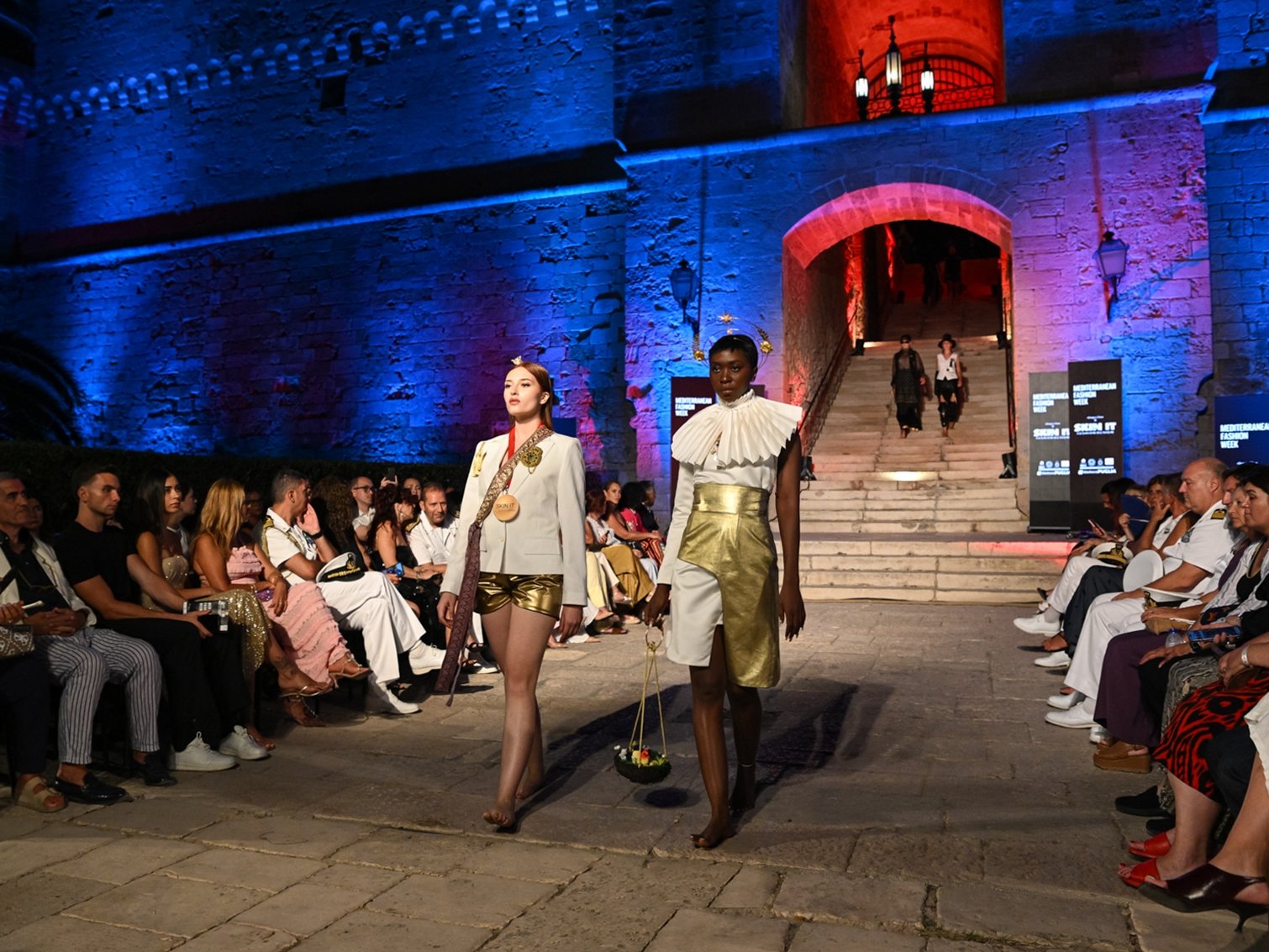

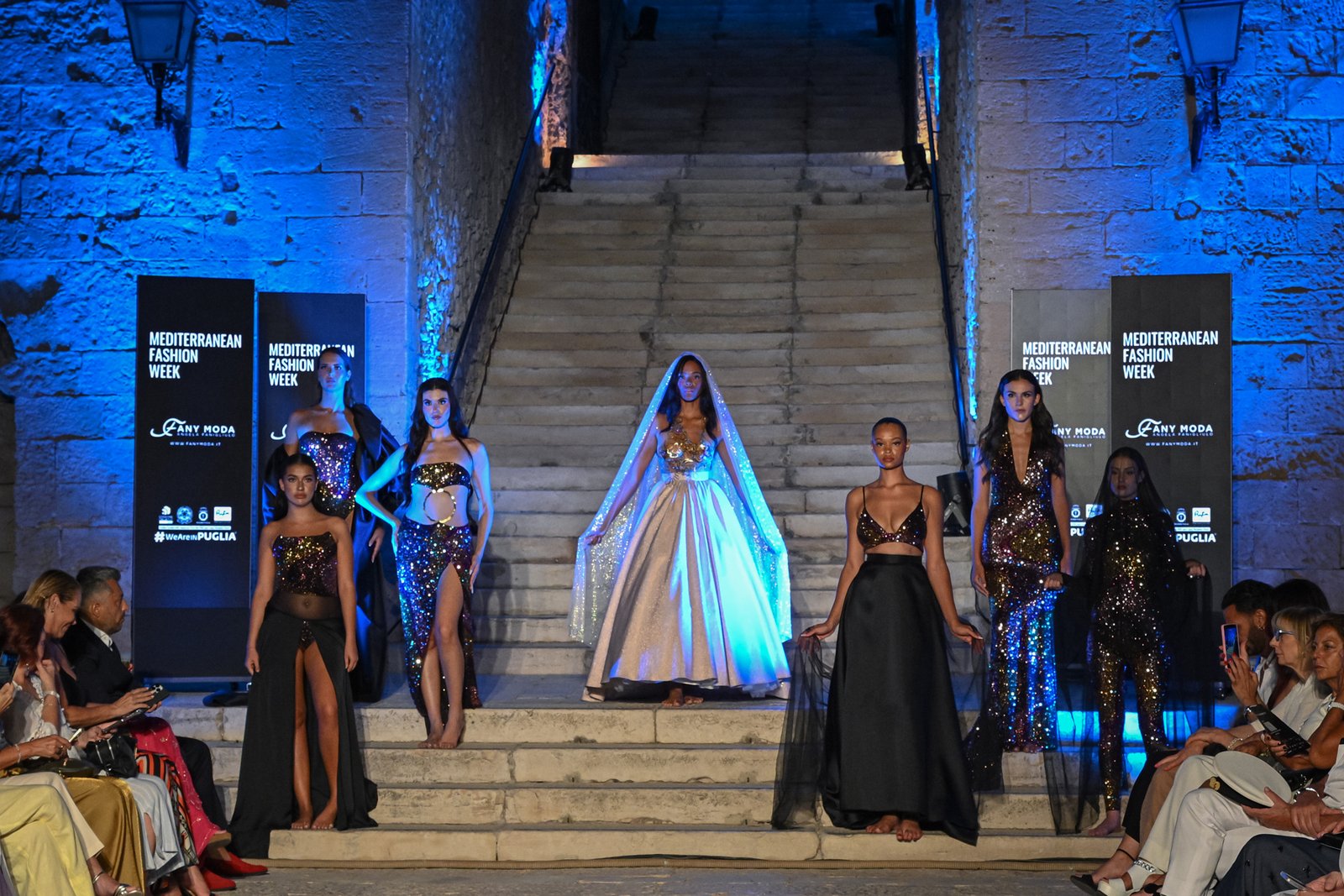
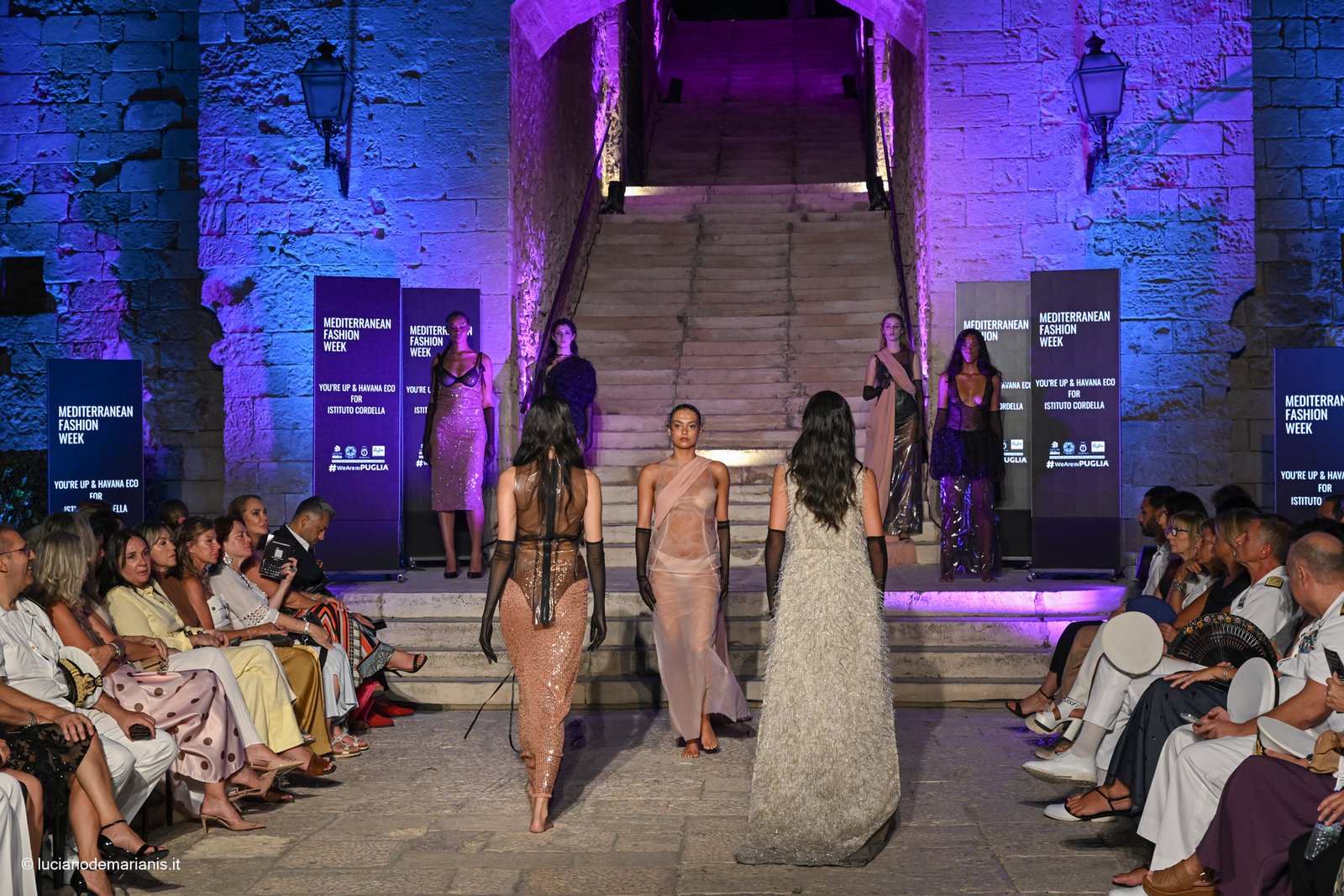
Representing Italy, Angela Fany showcased a refined and feminine collection celebrating Italian elegance, with shimmering details standing out against the night at the Castello. Istituto Cordella once again took part in the programme, this time alongside Havanna&Co, collaborating on a series of creatively developed designs born from upcycling.

Day 3 — MESAGNE
The third day took place in Piazza Orsini in Mesagne. The evening combined international designer presentations with the beginning of the Eco-Couture competition, dedicated to emerging designers and encouraging them to reinterpret materials, techniques and cultural heritage from a more conscious and experimental perspective.
The evening opened in spectacular fashion with Argentinian ADN by Andrea Garmendia, a collective show bringing together a selection of renowned Argentine designers like Adriana Costantini, Marcelo Senra, Francisco Ayala, Ana Pugliesi, Verónica de la Canal, Kuarajhy or Matices. From couture to ready-to-wear, the presentation became one of the highlights of the day.

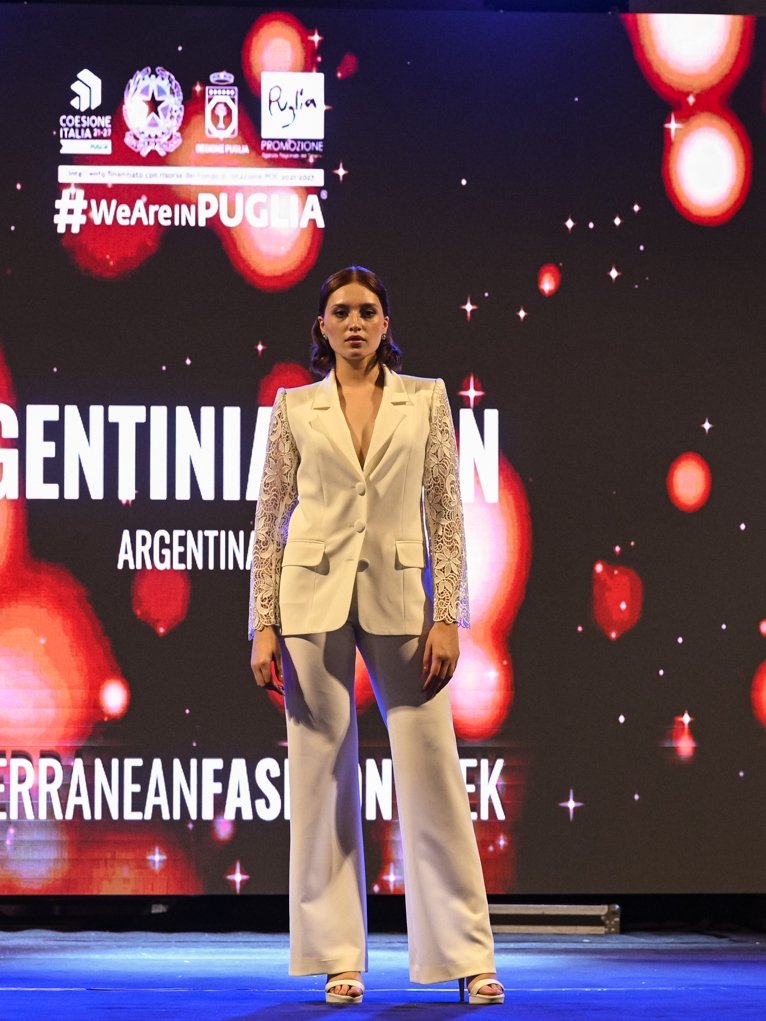
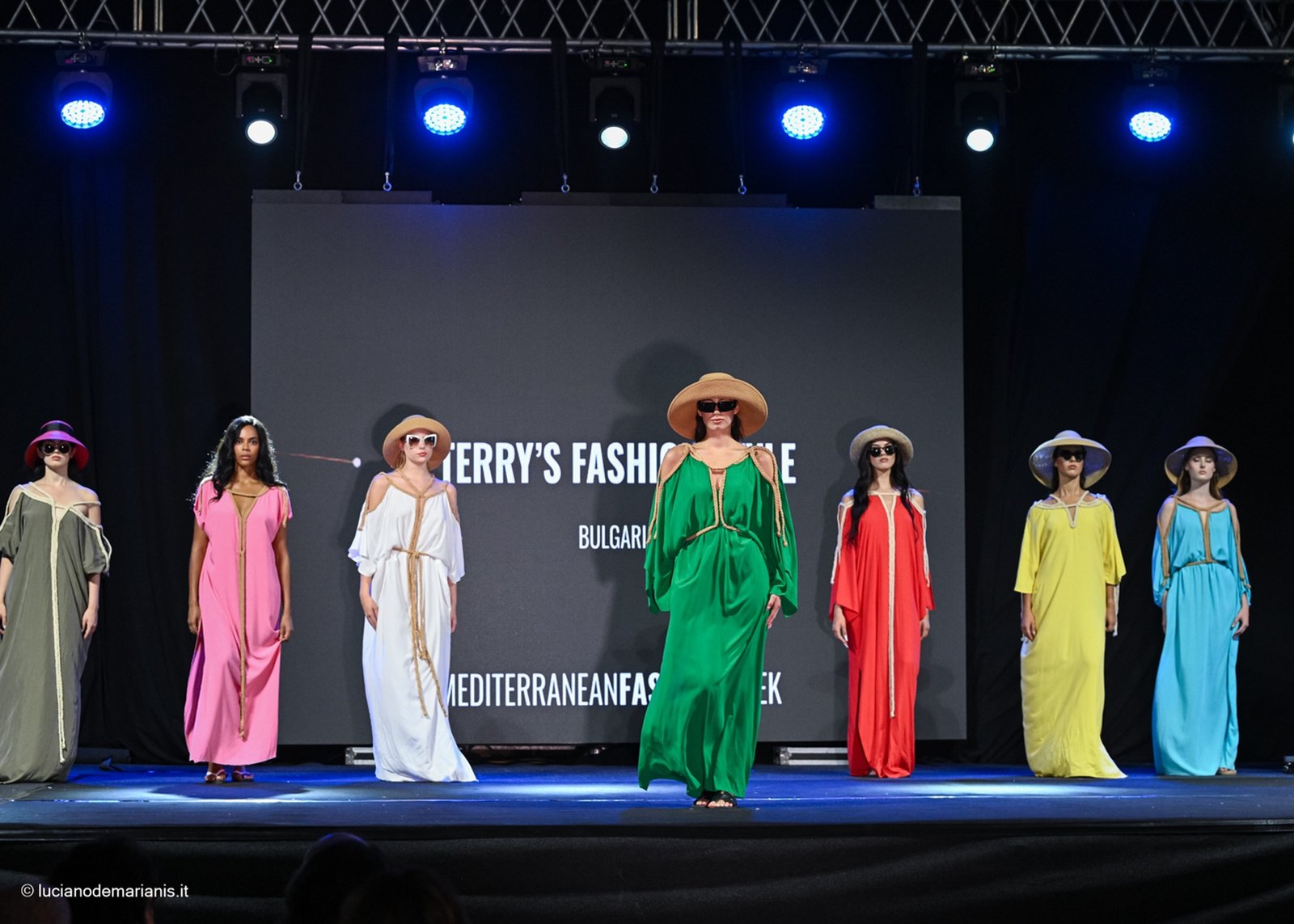
From Bulgaria, Mila Zaharieva presented a feminine and audacious proposal combining black and white with touches of colour and expressive prints like flowers, stripes and polka dots. Kerana, meanwhile, explored tradition and culture through intricate embroidery, while Terry’s Fashion Style brought a fresh, colourful and distinctly summery energy to the runway.
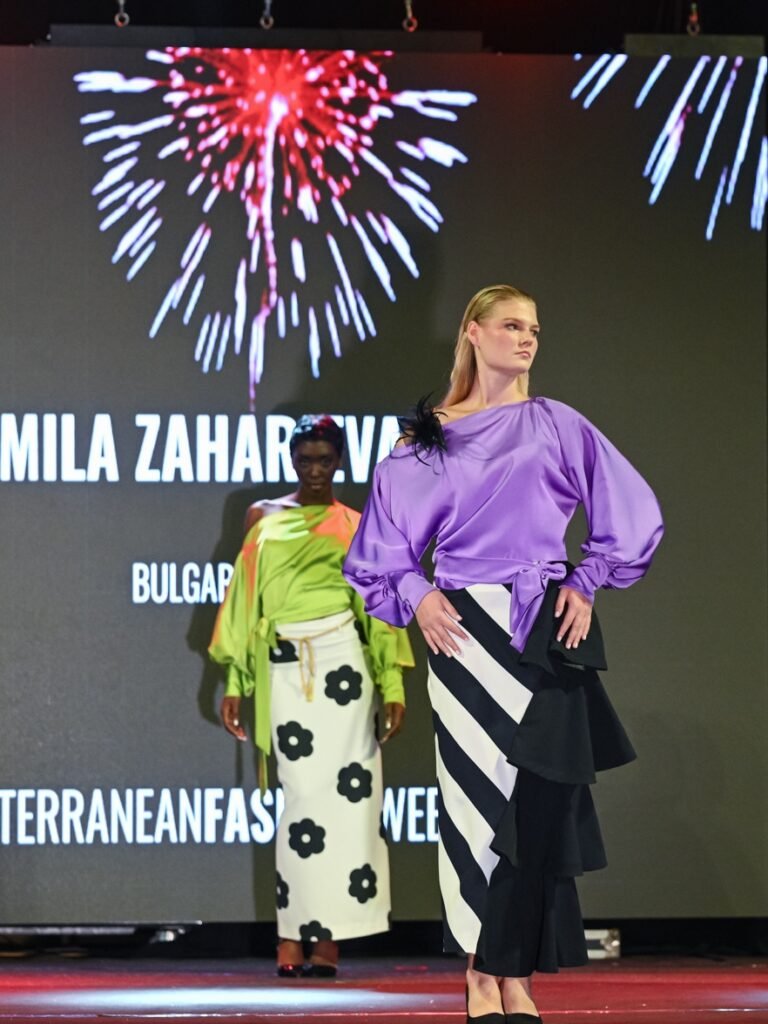
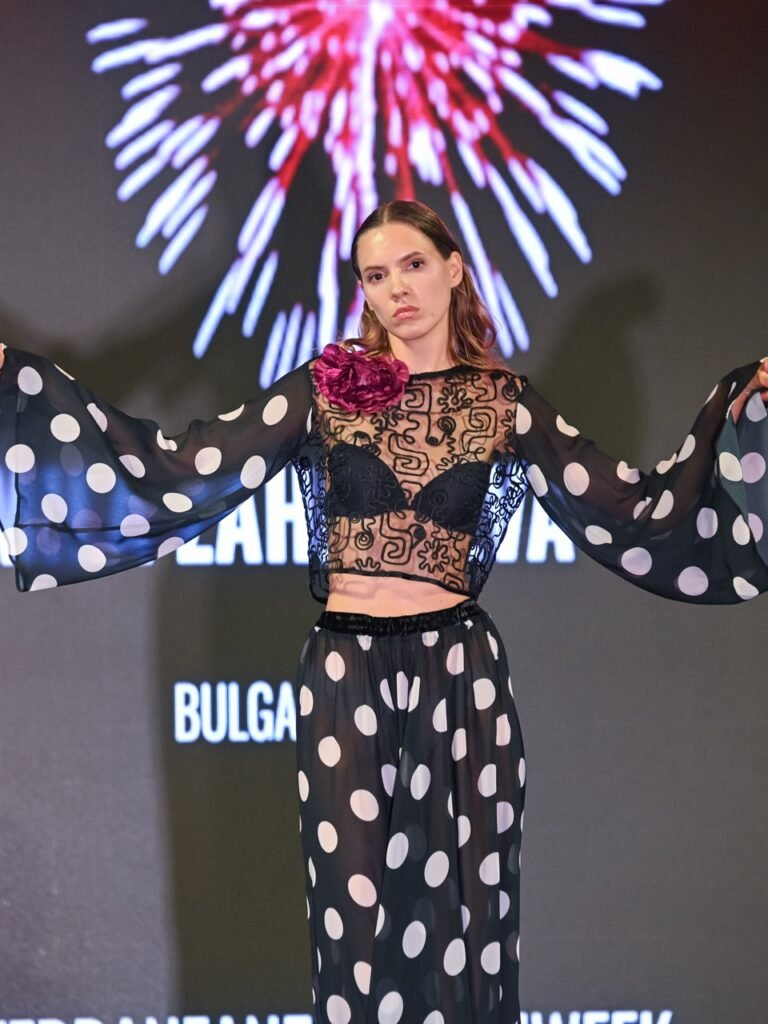
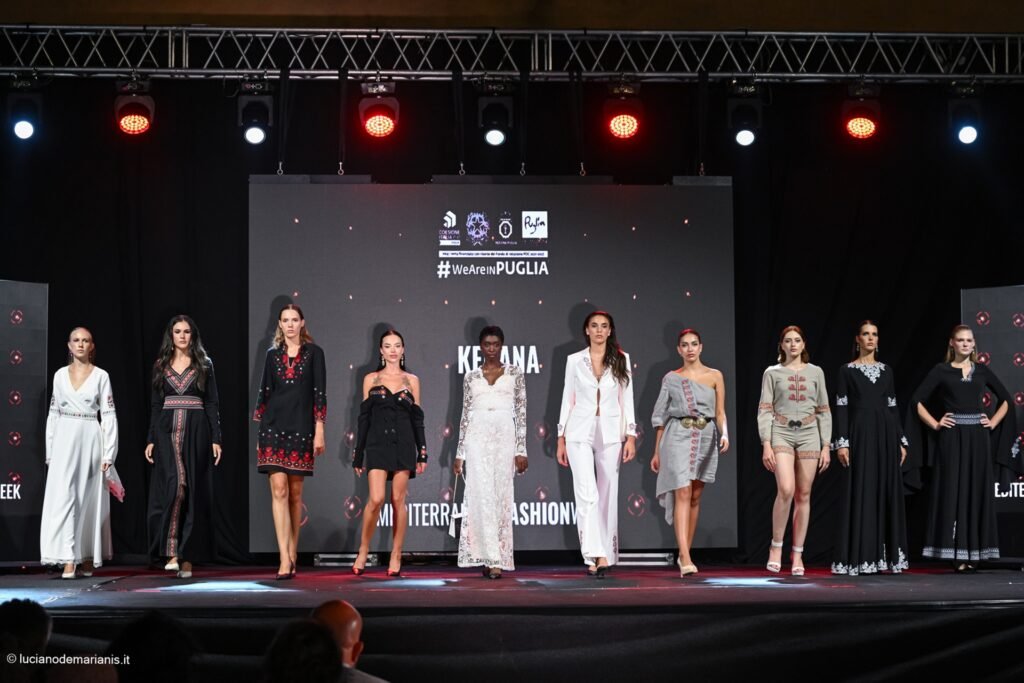

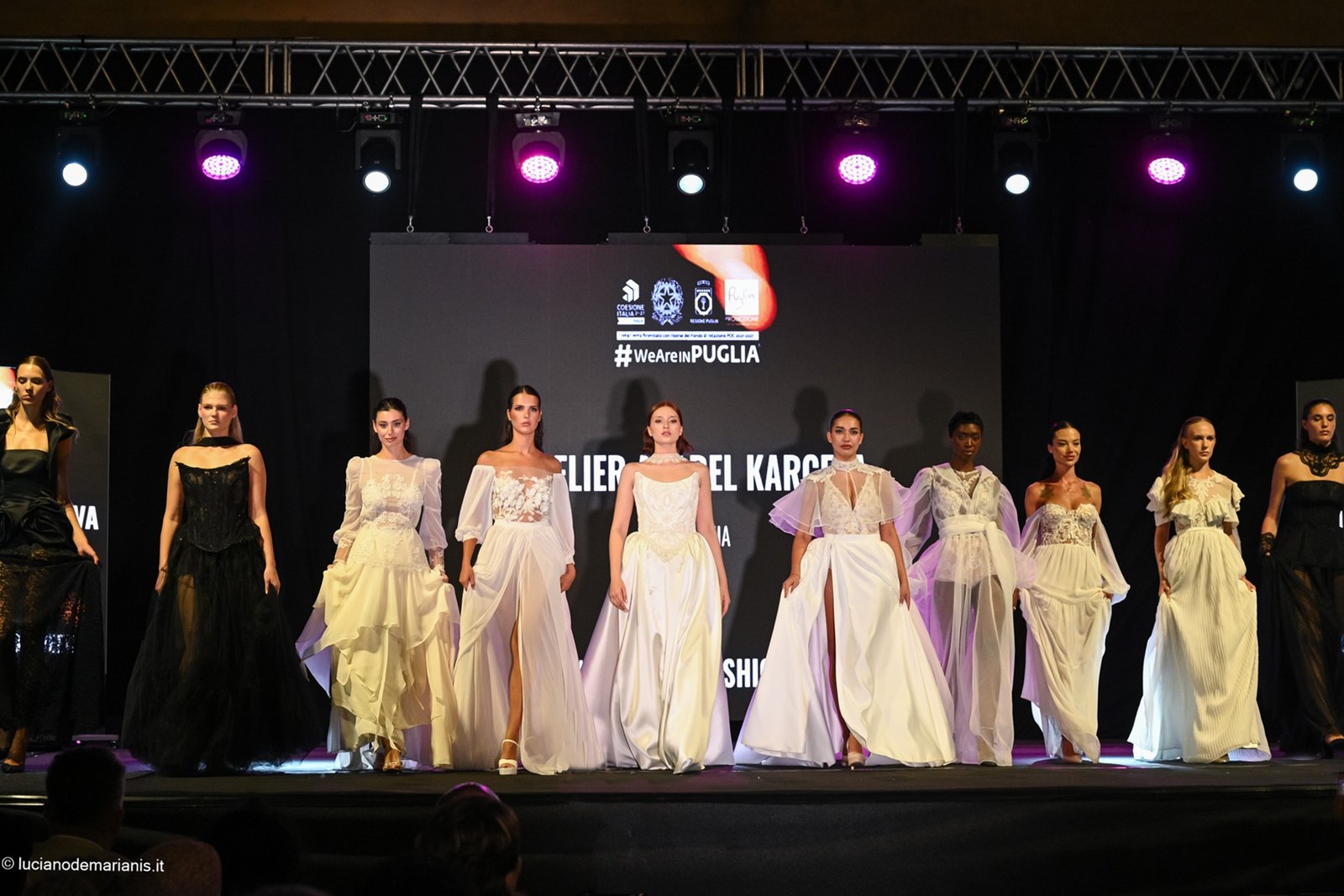
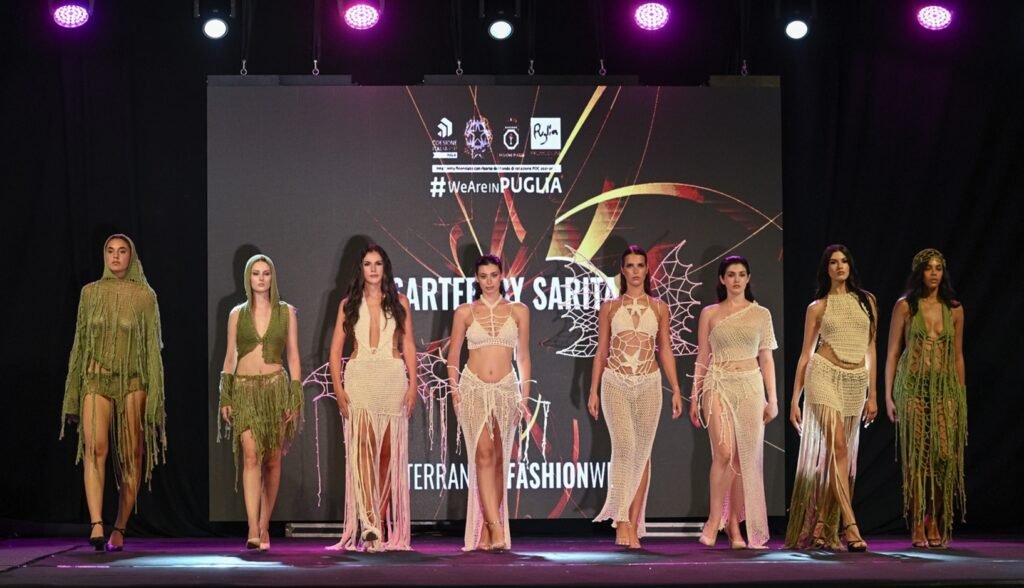
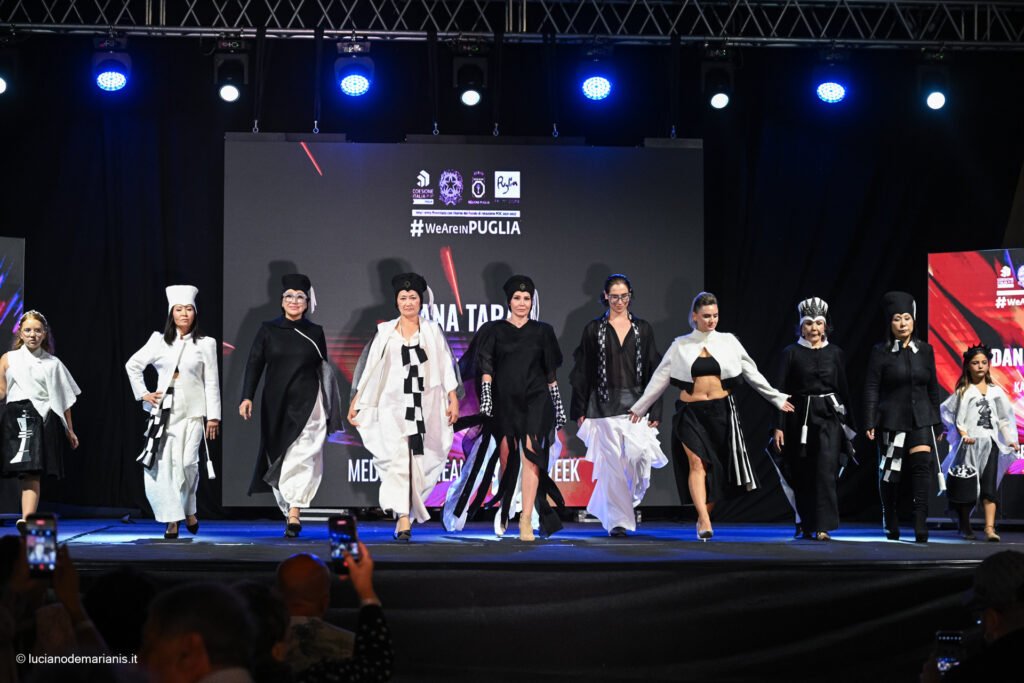
Atelier Aparèl Karceva from Macedonia presented sophisticated evening gowns in which black gave way to white across the collection. Sarteè by Sarita, from Albania, presented an ethnic-inspired collection of handwoven fabrics and deconstructed silhouettes, evoking muses emerging from the water. From Kazakhstan, Dana Tarazi brought the black-and-white dialogue to life through geometric cuts and check patterns, presenting designs by natural women on the runway.

Day 4 — BARI
Bari hosted the fourth day at Anche Cinema Theatre. In contrast to the historic settings of the previous days, the city introduced a more urban and contemporary atmosphere. On its stage, Isabella Di Matteo opened the programme representing Italy, with joyful creations, evening gowns and touches of flowers designed to celebrate femininity.
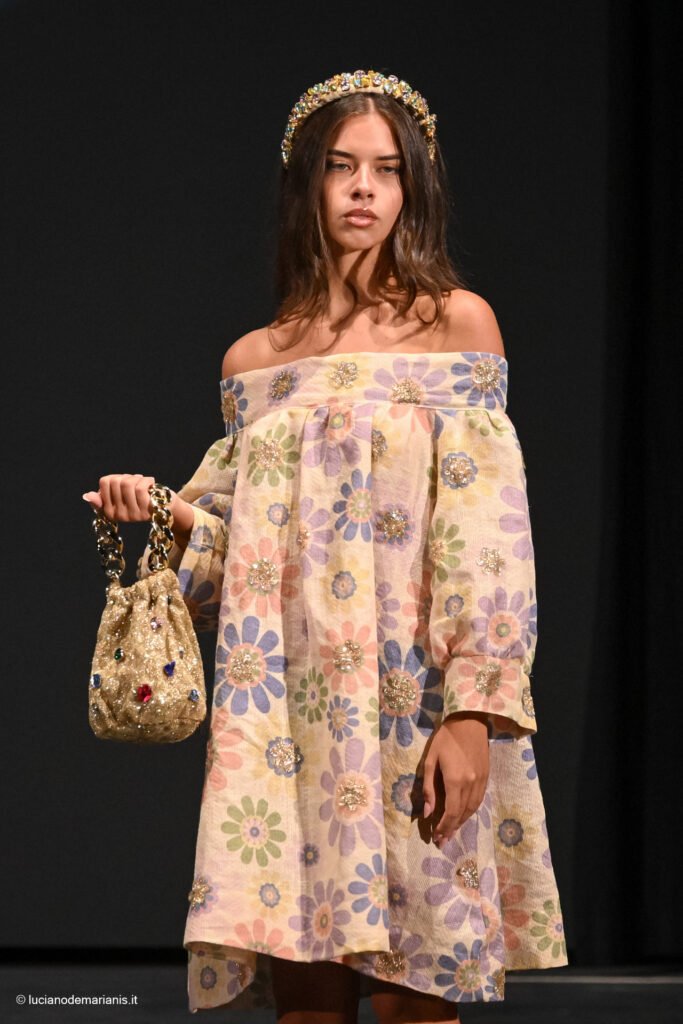
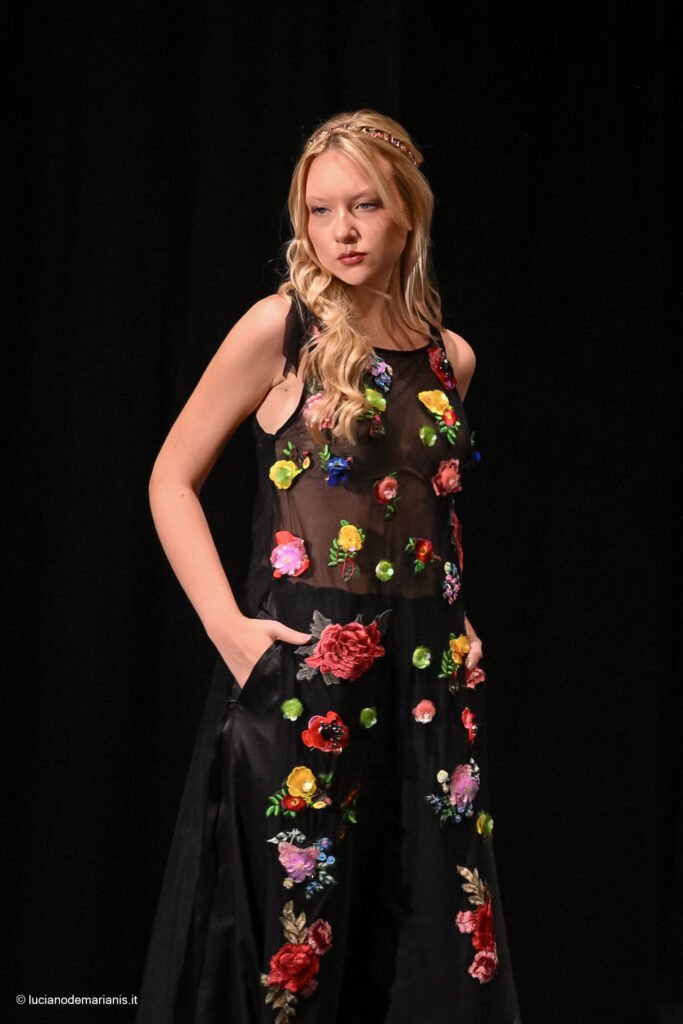
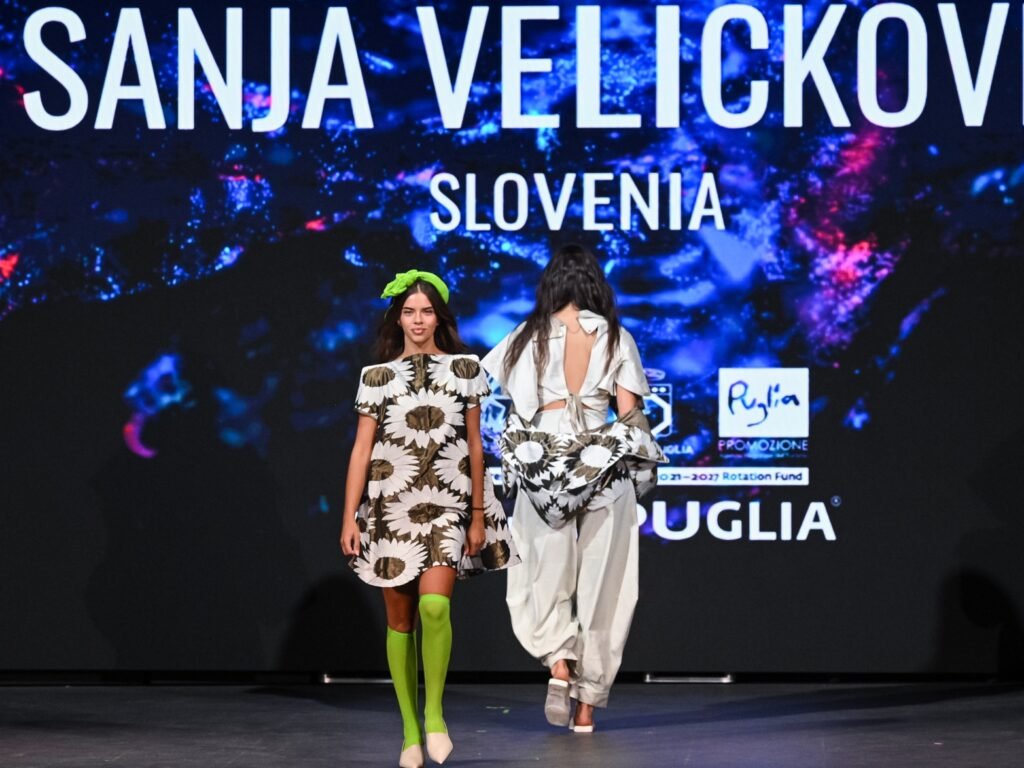
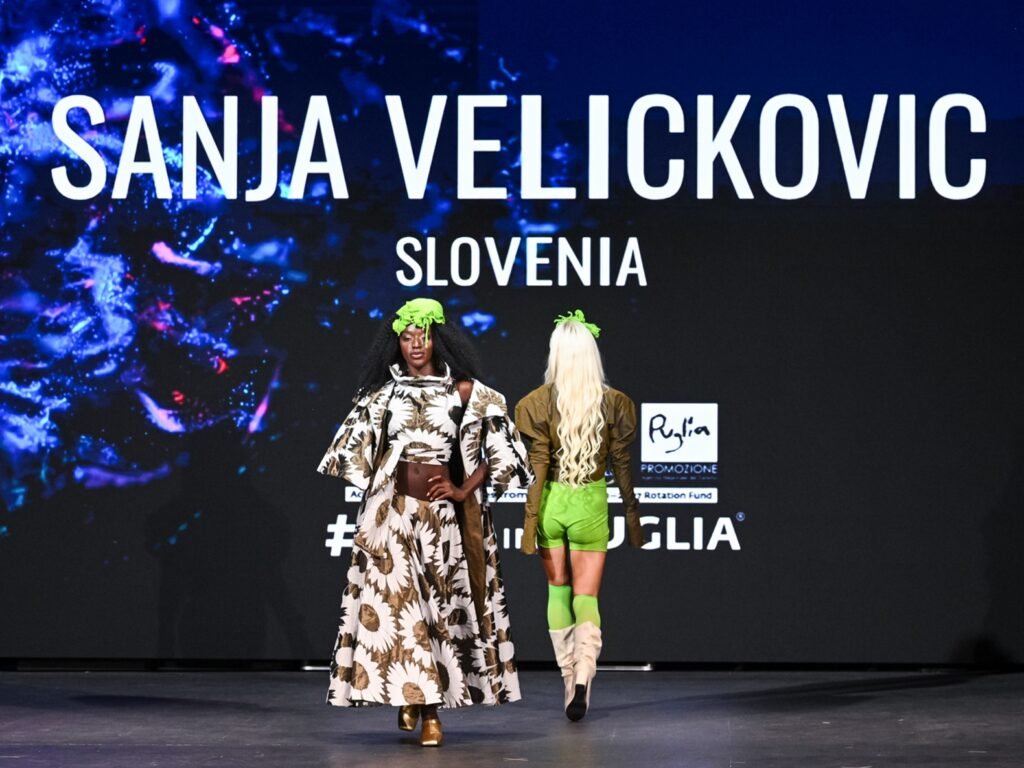
The spotlight then turned to Slovenian designer Sanja Velickovic, whose distinctive cuts and spring-inspired references brought a fresh and vibrant energy to the runway.

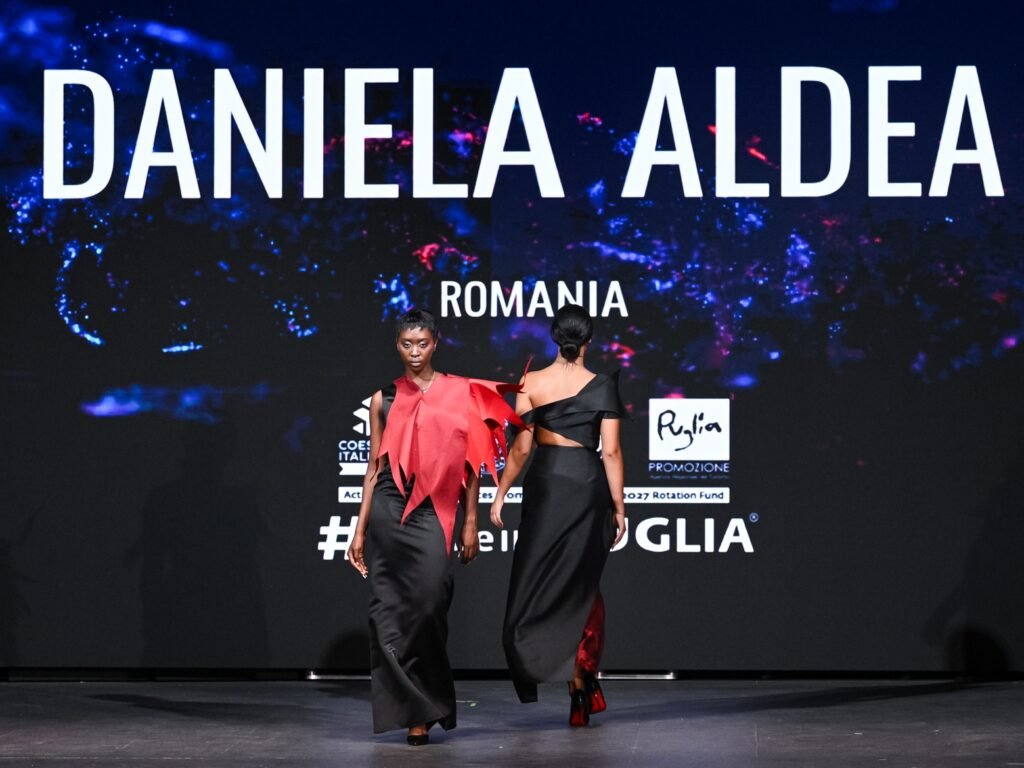
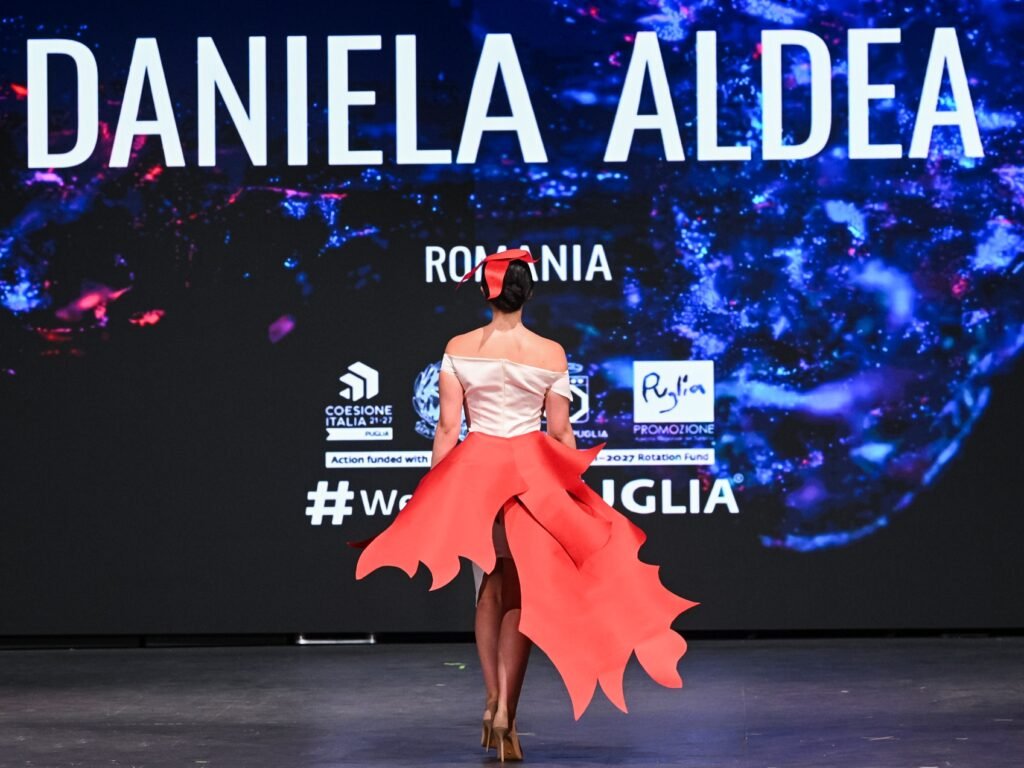
The international programme concluded with emerging Romanian designer Daniela Aldea, who presented a highly feminine collection inspired by the Gothic Rose. Evocative silhouettes and transformable garments revealed a designer with considerable promise for the future.
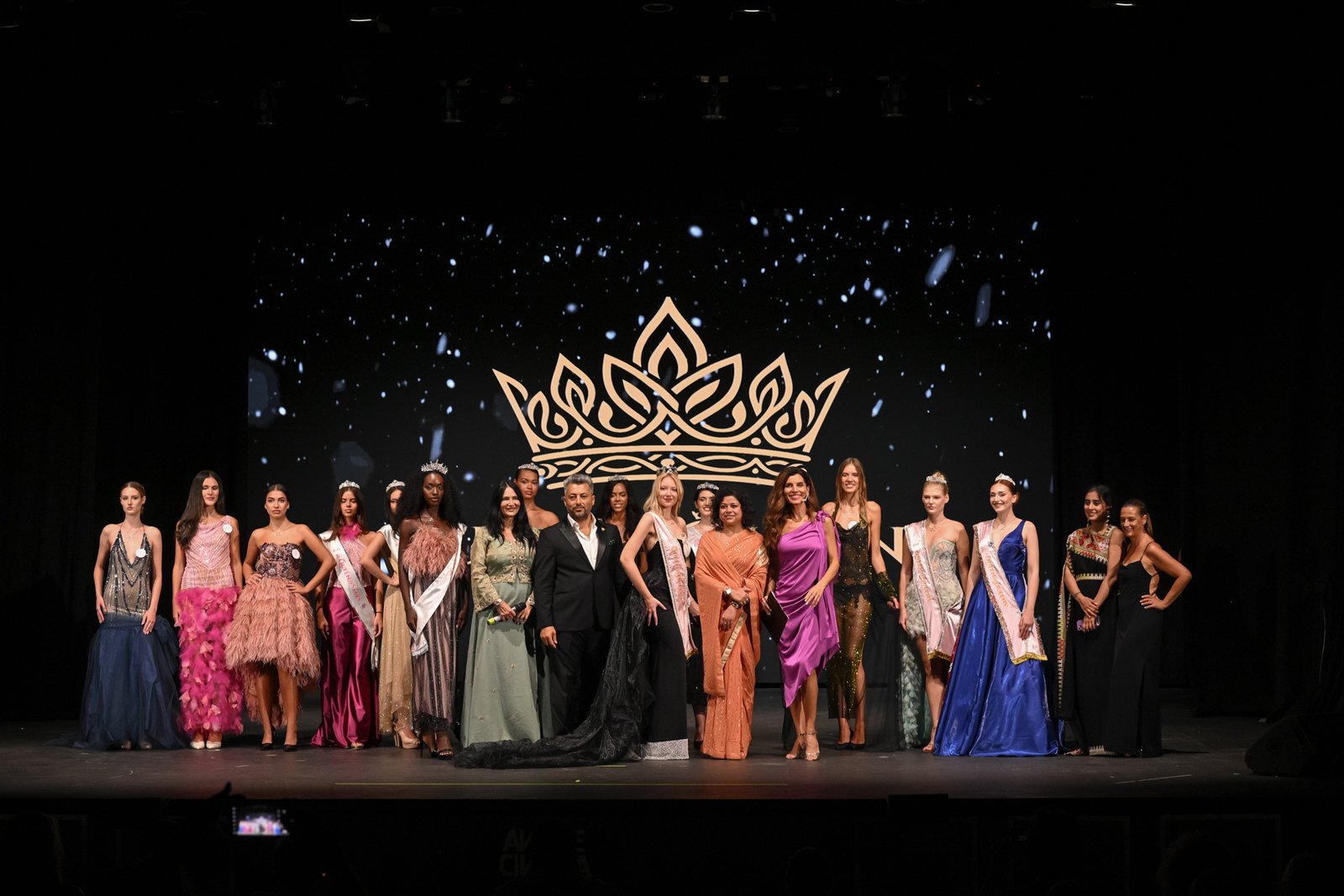
The culmination of the day was the Queen of Queens competition, a beauty pageant conceived to go beyond conventional standards, seeking an international representative distinguished by versatility, talent and a strong stage presence.
Day 5 — VIESTE
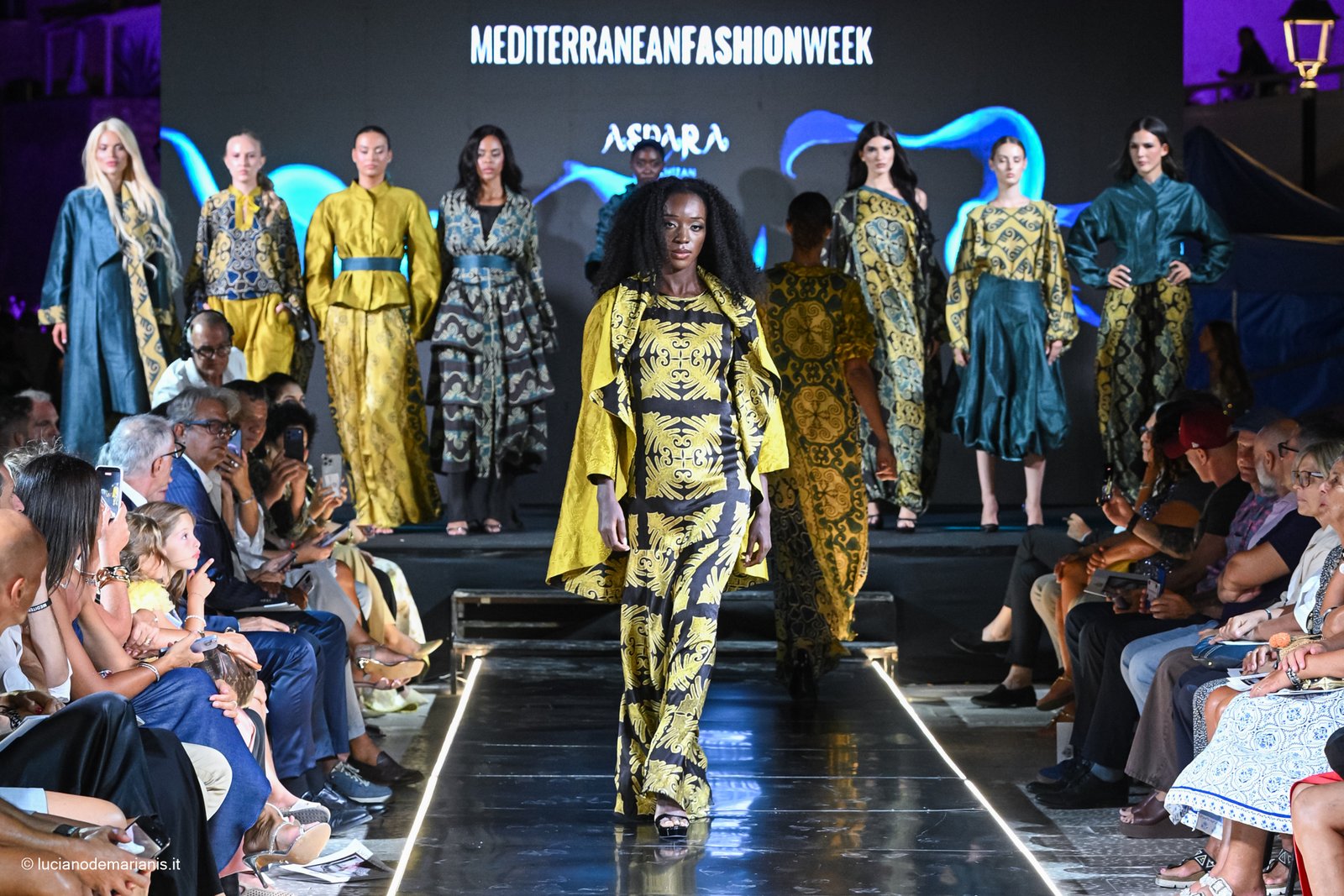
The final day of shows brought Mediterranean Fashion Week to Vieste, where Via San Francesco and its open views towards the sea provided an unmistakably Mediterranean setting for the closing presentations. The evening began with Aspara by Aidarkhan Kaliev from Kazakhstan, who presented a restrained collection featuring ethnic prints based on a palette of blue, black and olive.
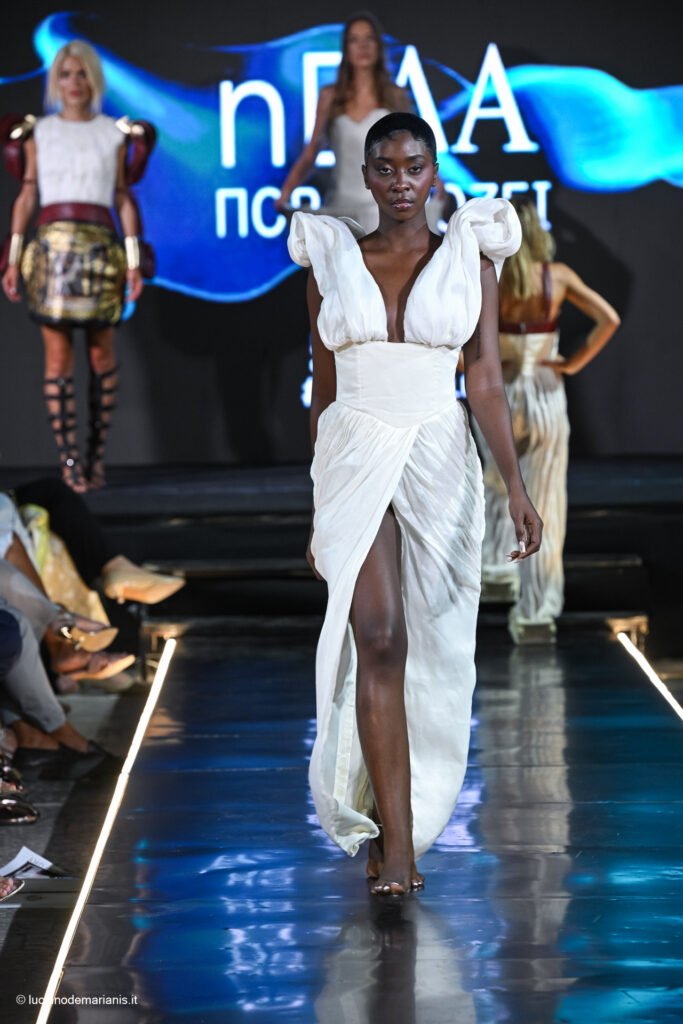
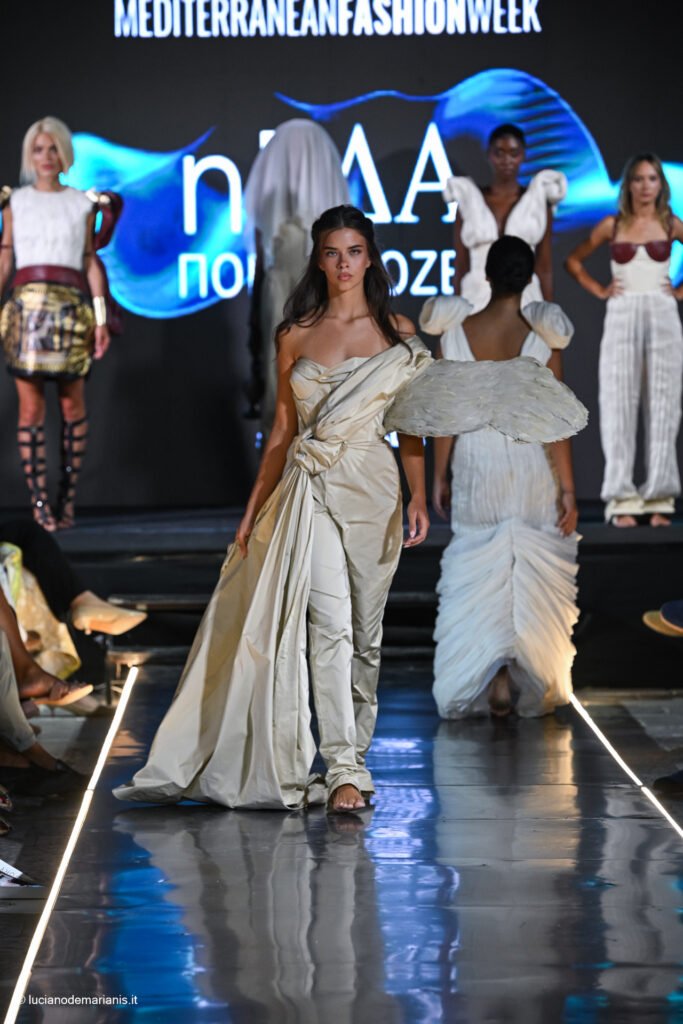
From Serbia, one of the most compelling presentations came from Neda Porphyrozei, who delivered a creative performance inspired by Greco-Roman art. Voluminous silhouettes, painted elements and mosaic references unfolded to the dramatic sounds of Carmina Burana.
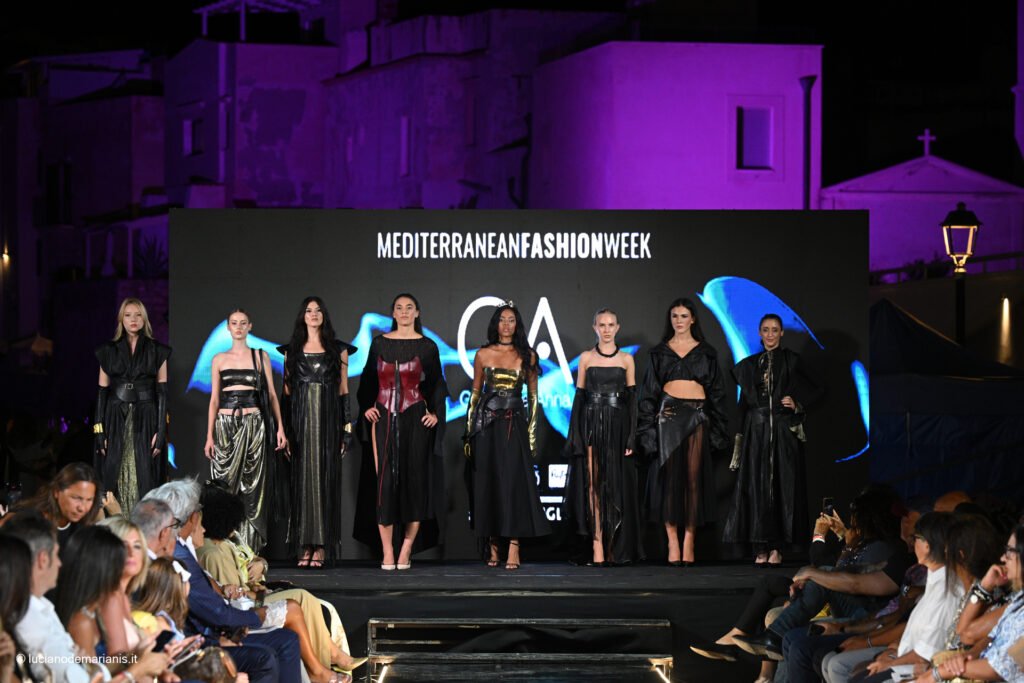
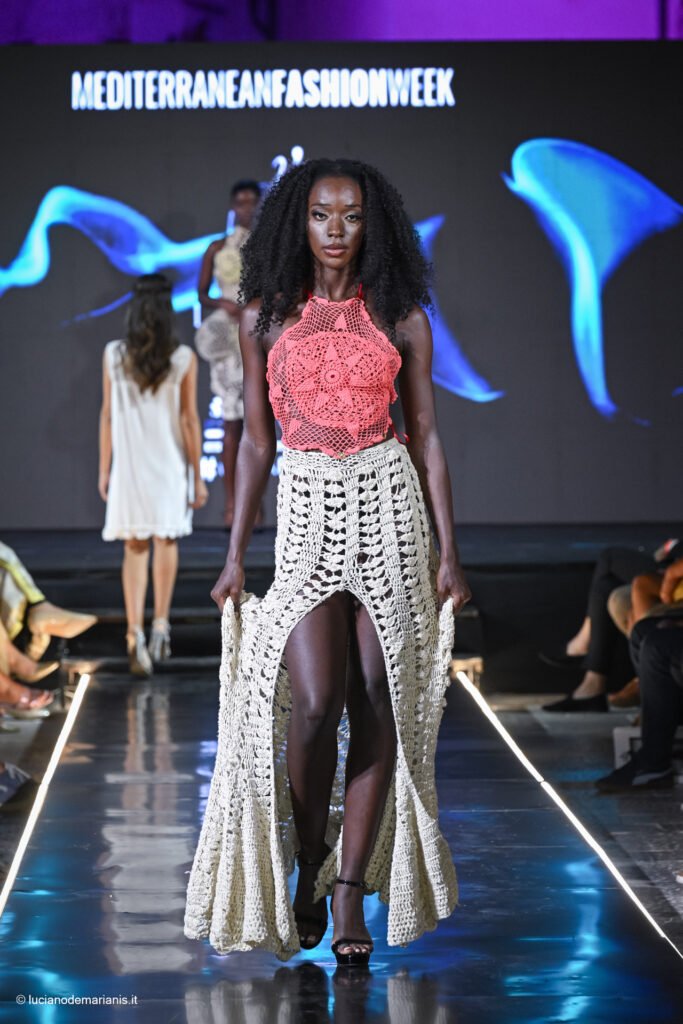
From Russia, Anna Grigorieva delivered an avant-garde collection in which sharp cuts, hoods and leather dominated the silhouettes. L’Otoole, from Malta, presented an ethereal, handcrafted collection designed to adapt naturally to the female silhouette.
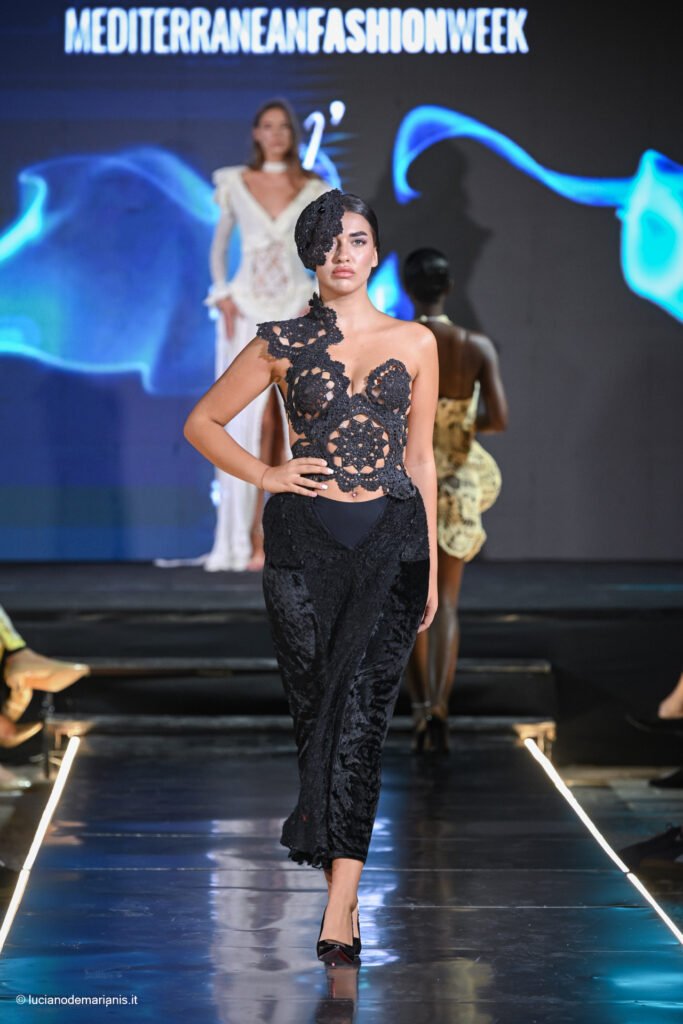
The Italian presence was represented by Marina Corazziari, whose jewellery creations dazzled against the Mediterranean backdrop. Bursts of light emerged from original geometric designs crafted in gold and natural stones.
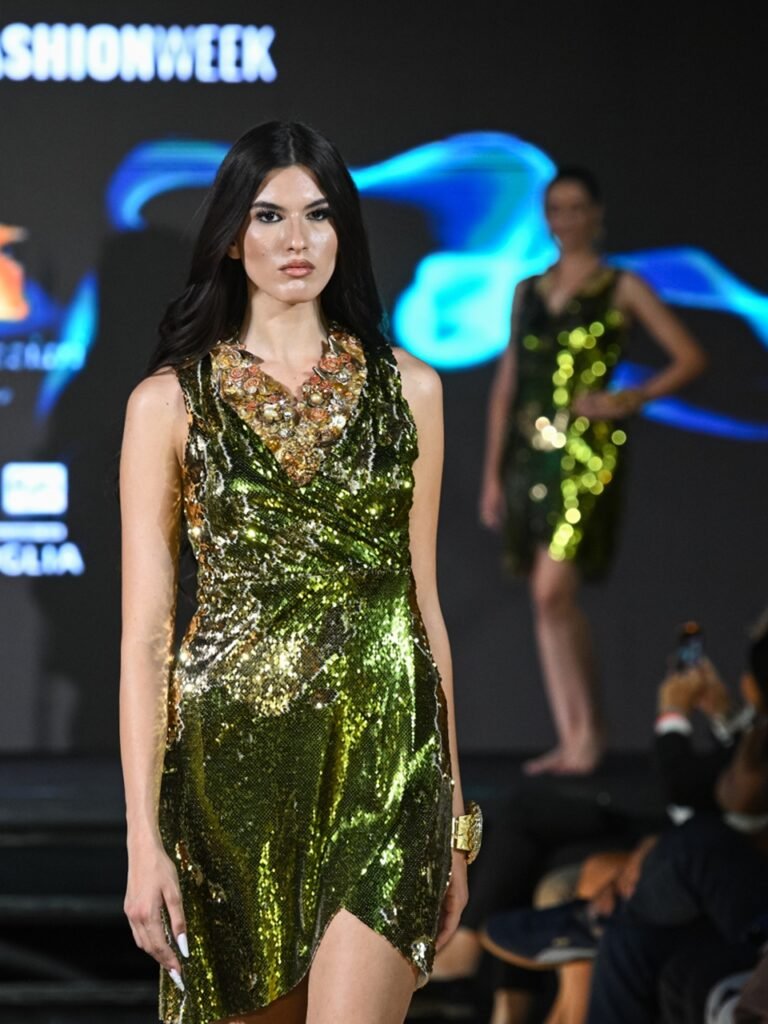
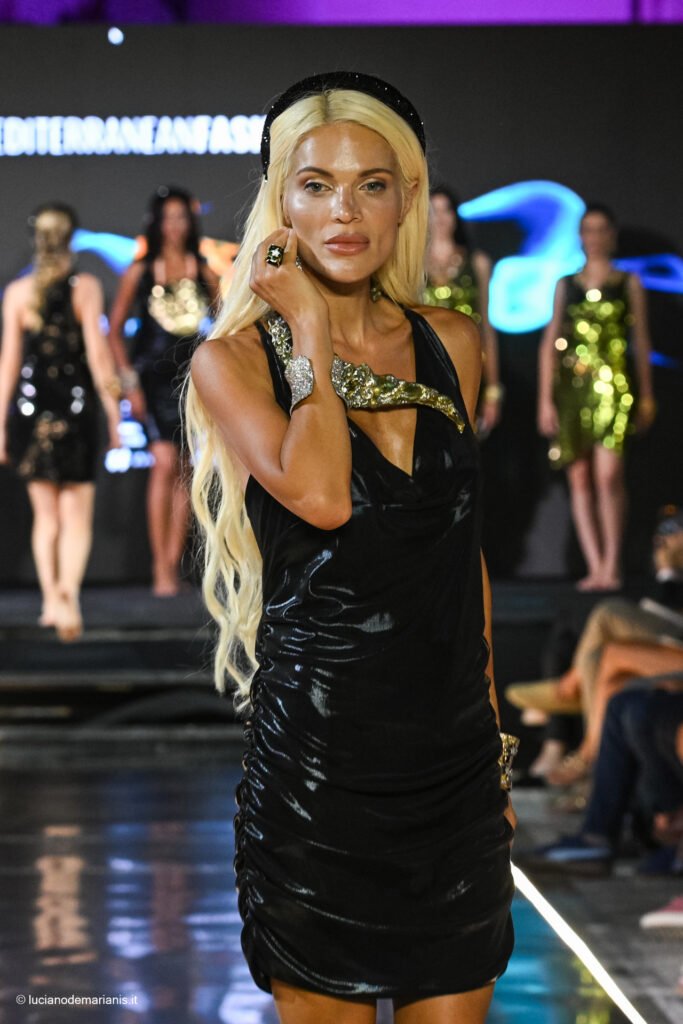
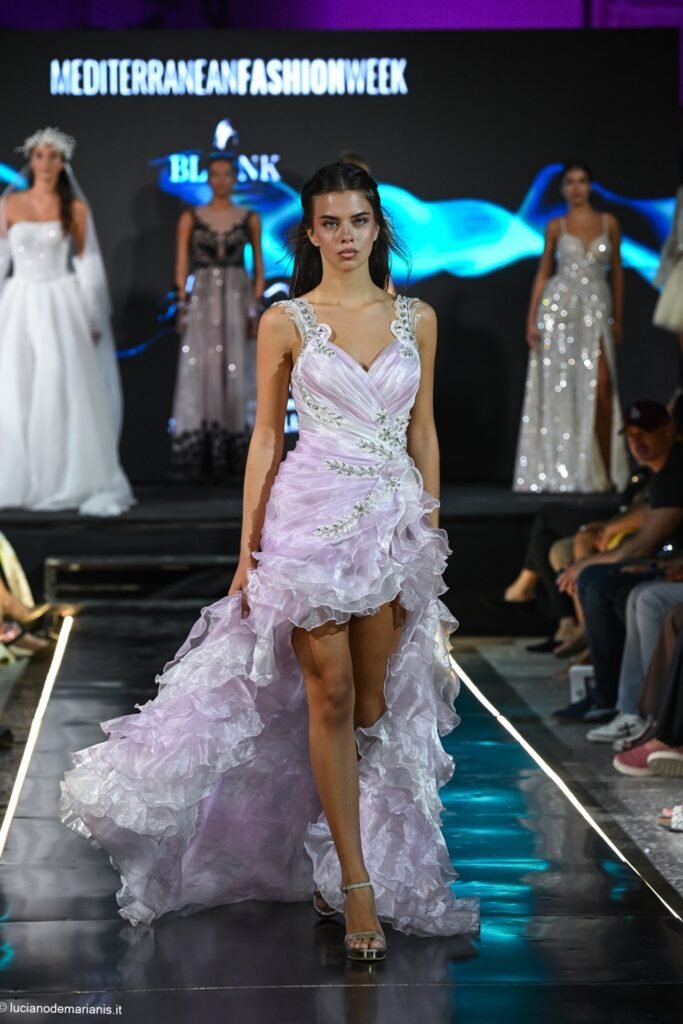
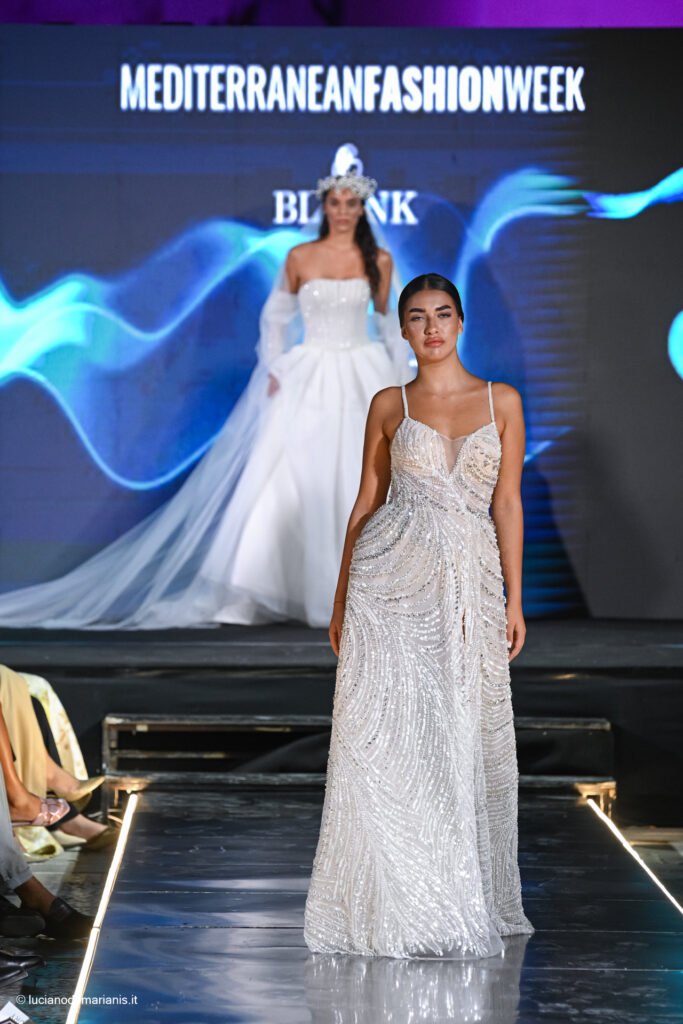
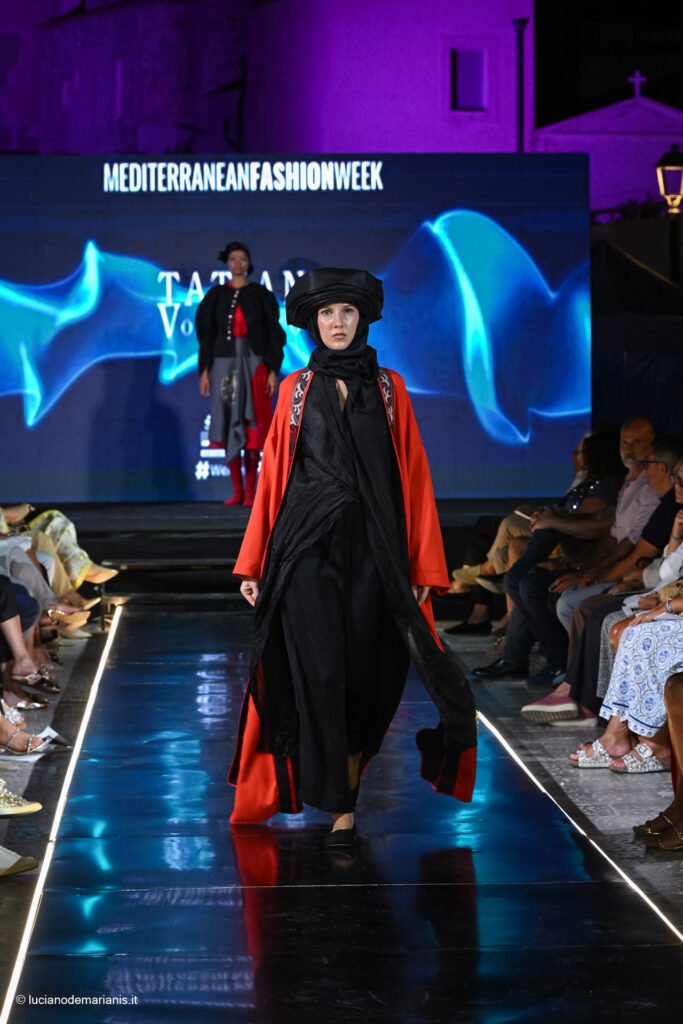
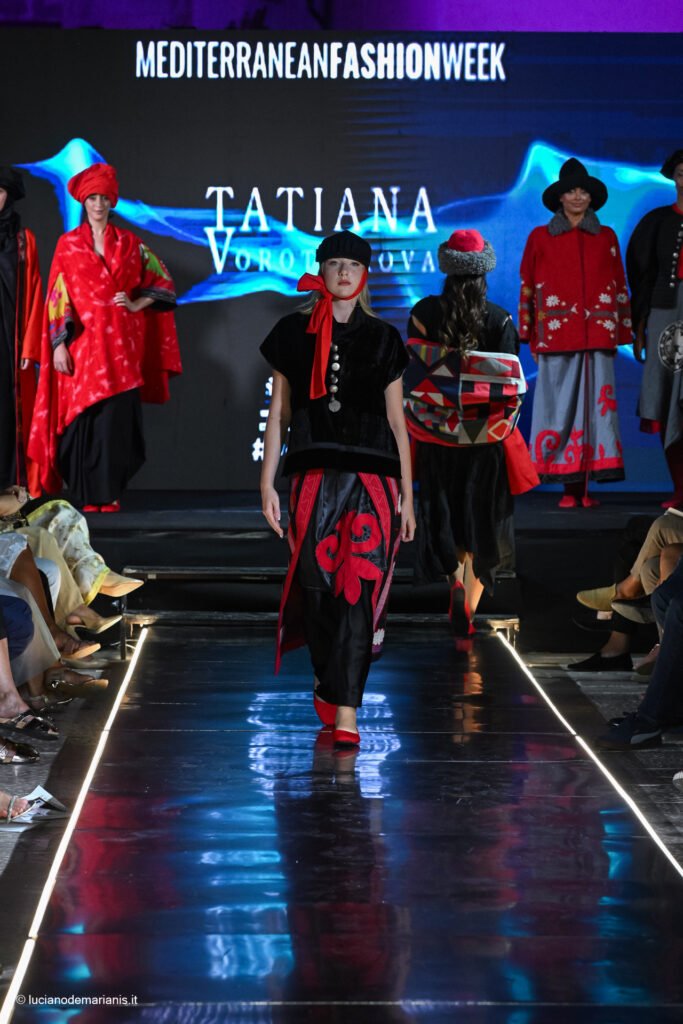
From Bulgaria, Blink by Radi Lazarova presented a collection of bridal and evening gowns enhanced by shimmering details and stone embellishments. From Kyrgyzstan, Tatiana Vorotnikova explored a red-and-black colour dialogue interrupted by touches of grey and color, creating a deeply cultural collection representative of her origins.
Continuing the exploration of ethnicity and heritage, Ziyatihan Ayidaerhan presented an interesting collection reflecting the richness of Chinese cultural heritage. From Kazakhstan, Indira Ikapova presented a nude, red and green ready-to-wear collection celebrating the natural beauty of the woman.

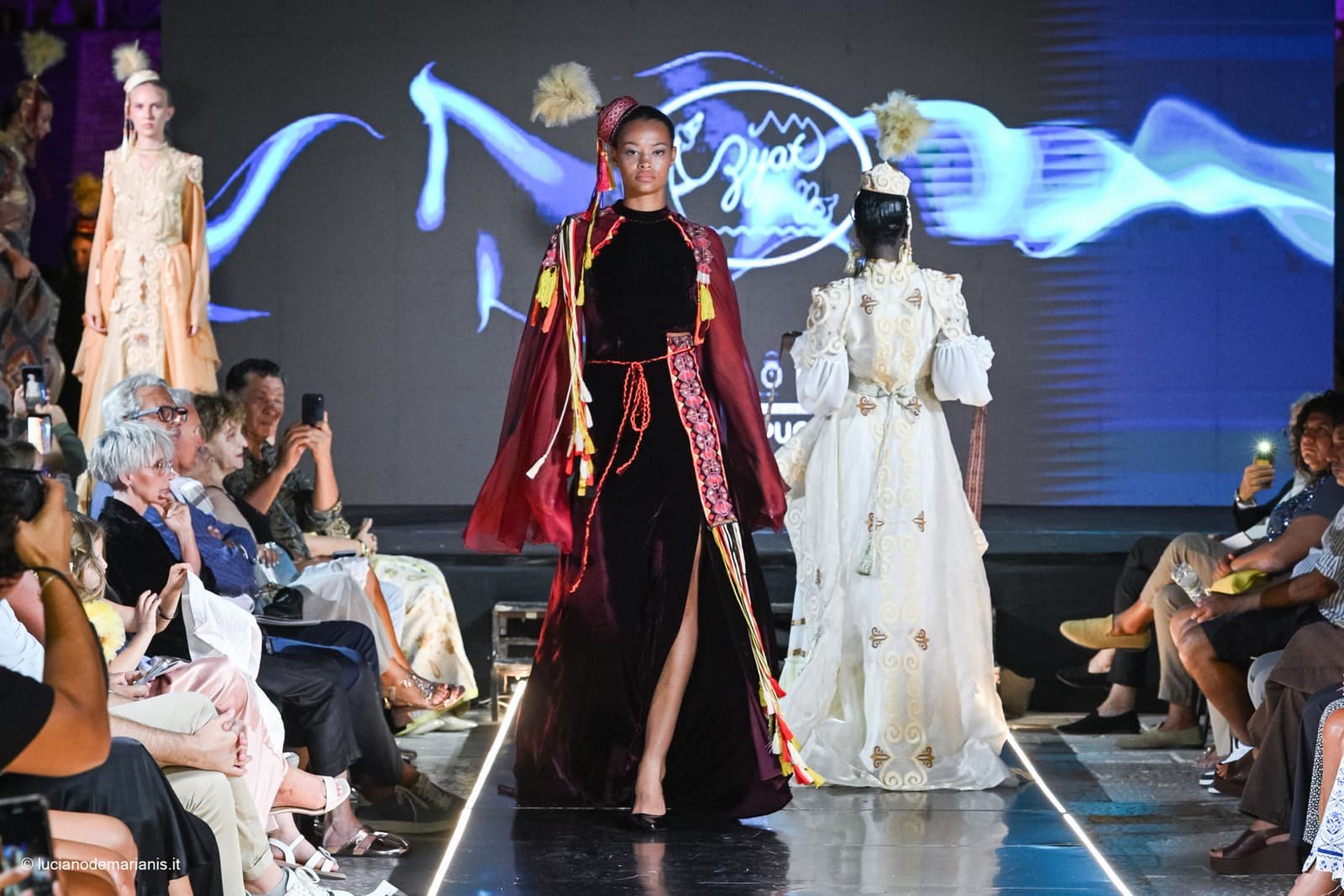
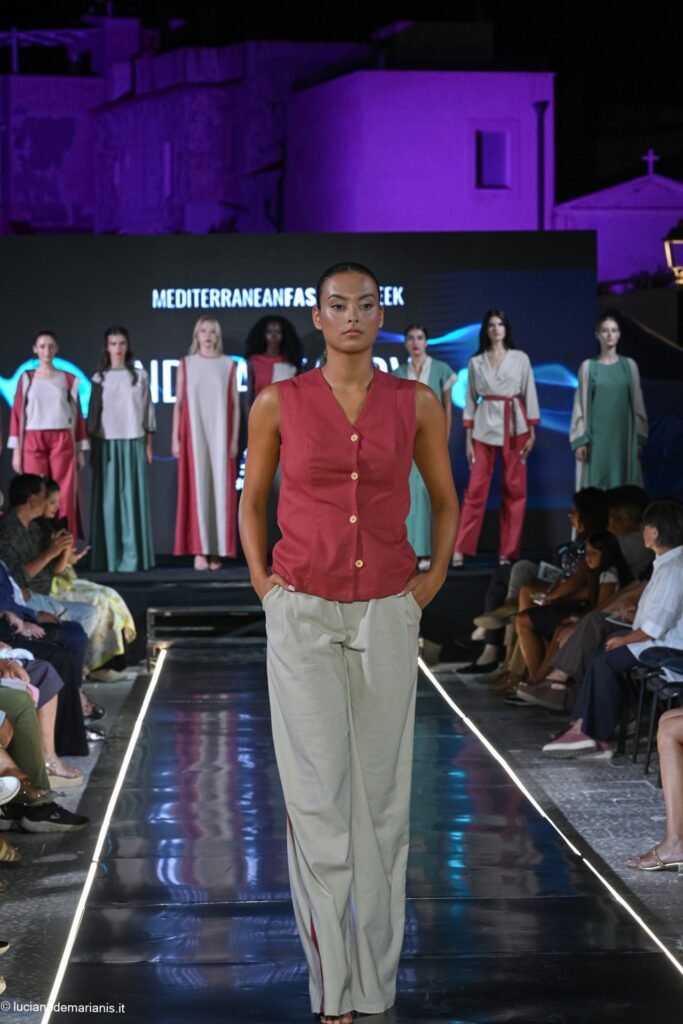
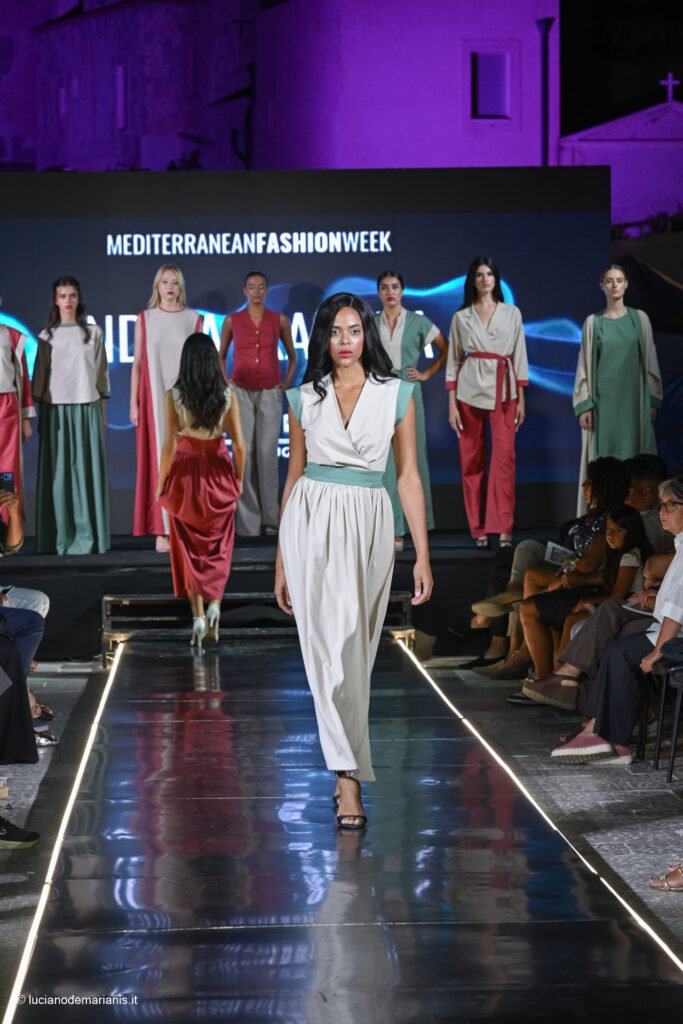
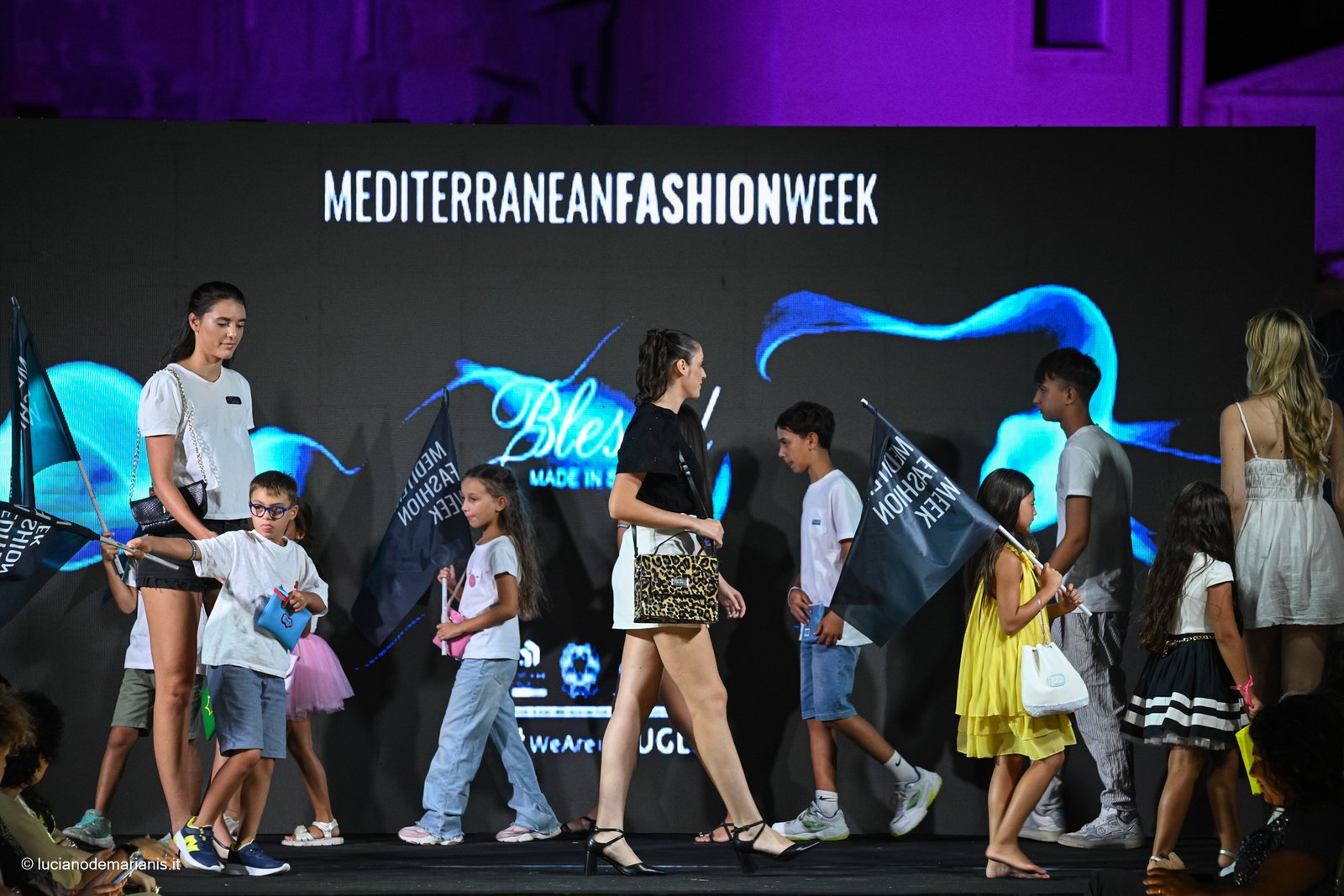
Present during all days, Blessed invites to all ages to dream through its playful selection of bags and leather goods, proudly made in Salento. Amela Radan, from Bosnia and Herzegovina, presented a fluid and ethereal collection of dresses featuring colorful and landscape-inspired prints. From Morocco, Imane presented an artistic collection in which dresses became canvases for floral and feminine-inspired paintings.
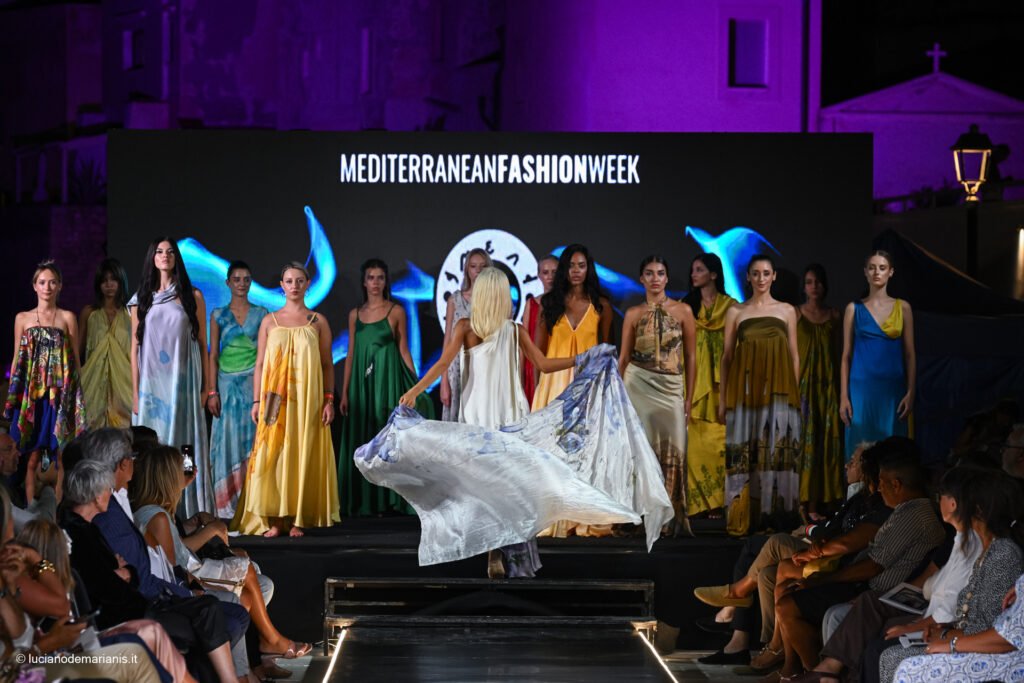
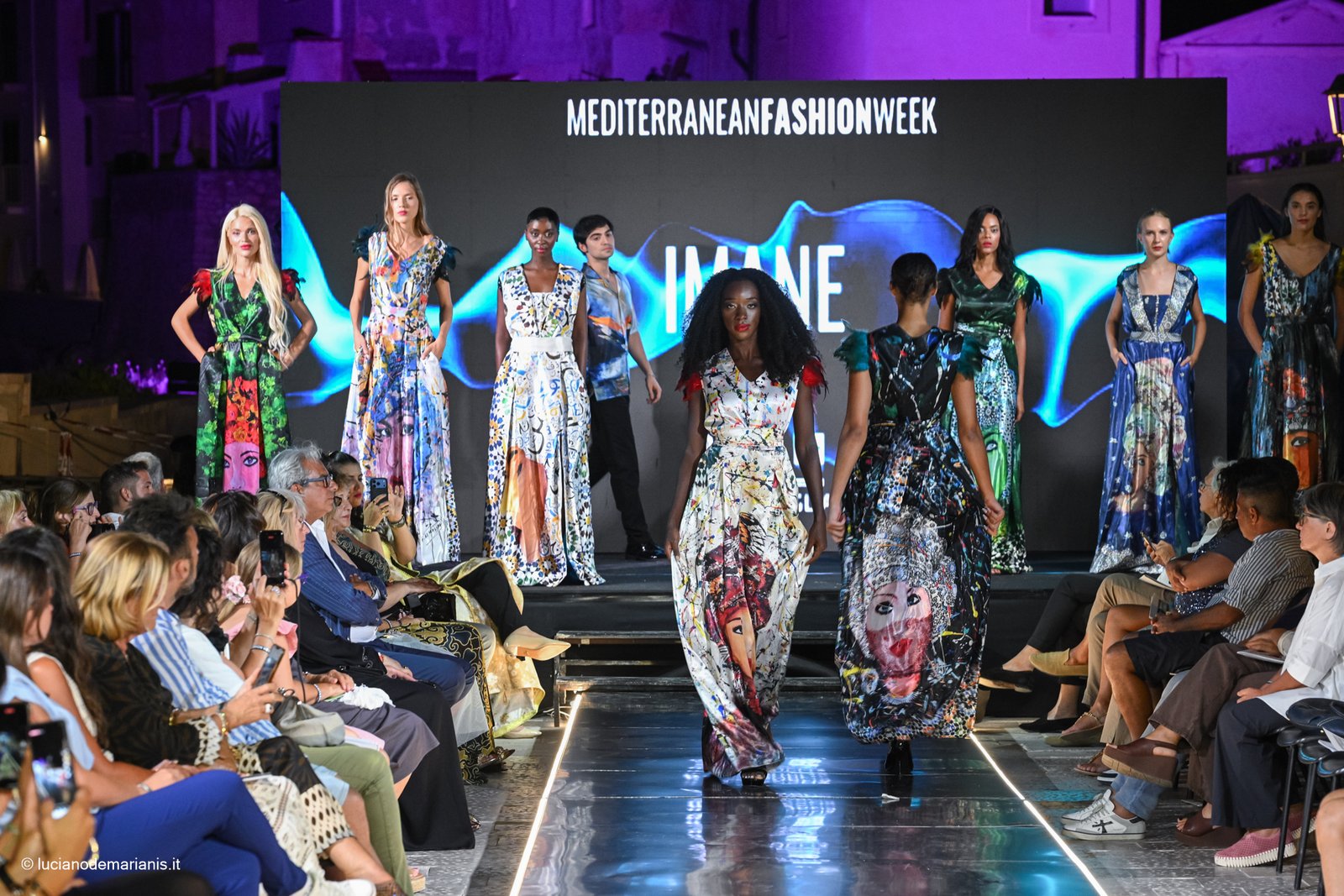
Beyond the individual names, what makes the Mediterranean Fashion Week 2026 calendar particularly compelling is its structure. This is not a Fashion Week concentrated in a single city or confined to one venue. Five cities, five settings and more than fifty runway presentations created a journey through Puglia in which fashion entered into dialogue with architectural heritage, local culture and the diverse artisanal traditions of the participating countries.
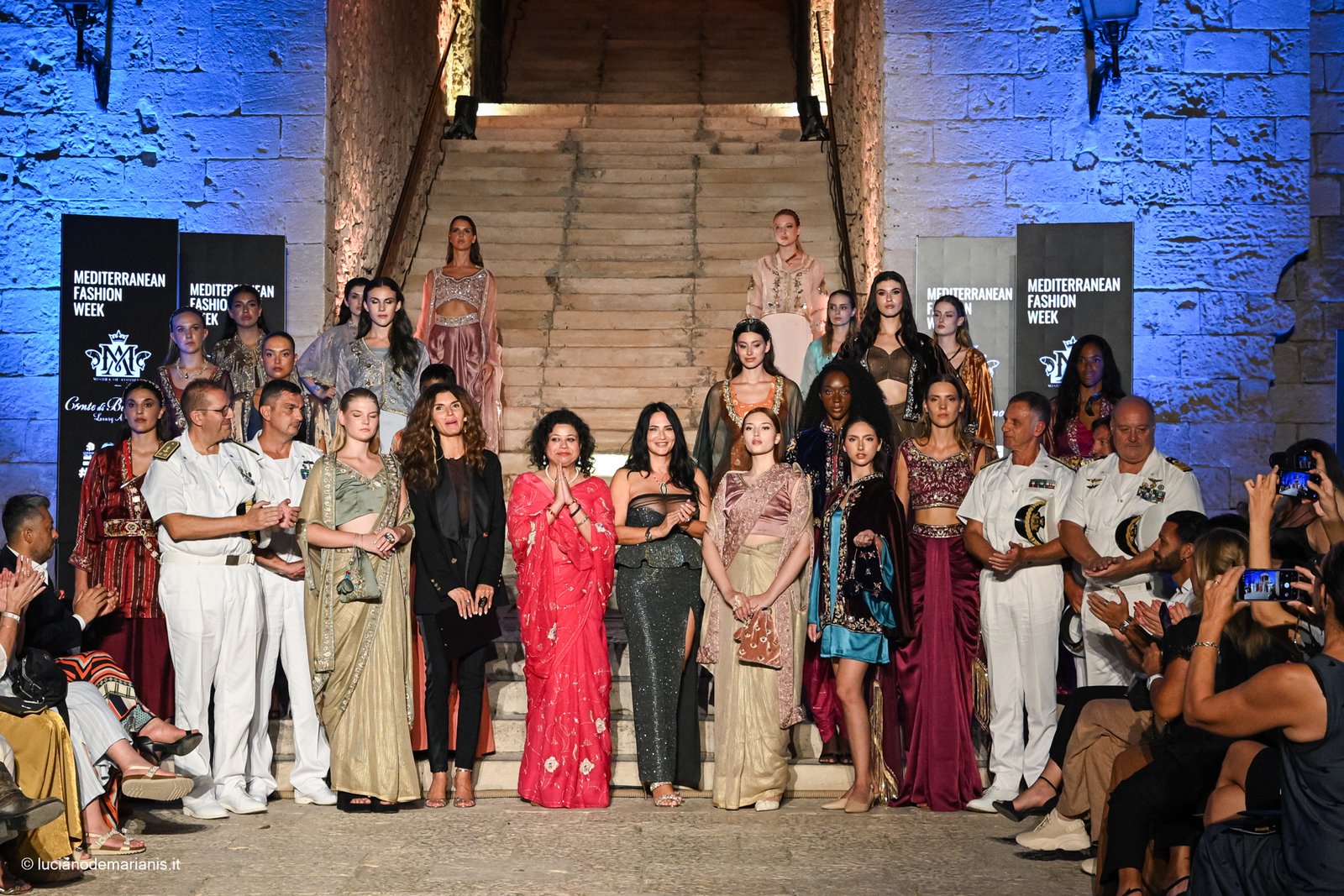
This vision was made possible through the work of Marianna Miceli, Director of Mad Mood Milano and creator of Mediterranean Fashion Week, with the aim of positioning Puglia as an international fashion destination.
From Argentina to India, from Uzbekistan to Spain, from Kazakhstan to Portugal, and across Italy, Greece, the Balkans and Eastern Europe, Mediterranean Fashion Week 2026 offered a journey through different interpretations of identity, beauty and the future of fashion, creating a stage where the boundaries between fashion and culture disappear.
*Pictures by Luciano de Marianis.